Online reputation management: reviews, complaints and communicating in a crisis
Online reputation management for small businesses and startups: monitoring how your brand appears online, growing Google and marketplace reviews, responding well to negative reviews and complaints, the legal risks of fake reviews, social media crises and measuring reputation.
By Editorial Team

When a customer hears about you for the first time, they usually type your brand into Google and check the stars and latest reviews. That impression, formed in seconds, often influences the decision more than your ads. Online reputation management means monitoring, improving and protecting how your brand appears online. This guide sets up a practical system even a small team can run.
Where reputation lives
| Source | Example | Why it matters |
|---|---|---|
| Search results | Page one for your brand name | Most first impressions |
| Maps and business reviews | Google Business Profile stars | Local search choice |
| Marketplace reviews | Product and store ratings | Direct effect on conversion |
| Complaint platforms | Complaint and resolution records | Trust and crisis signal |
| Social media | Comments, tags, shares | Fast-spreading perception |
| Press and blogs | News, reviews | Long-lived search results |
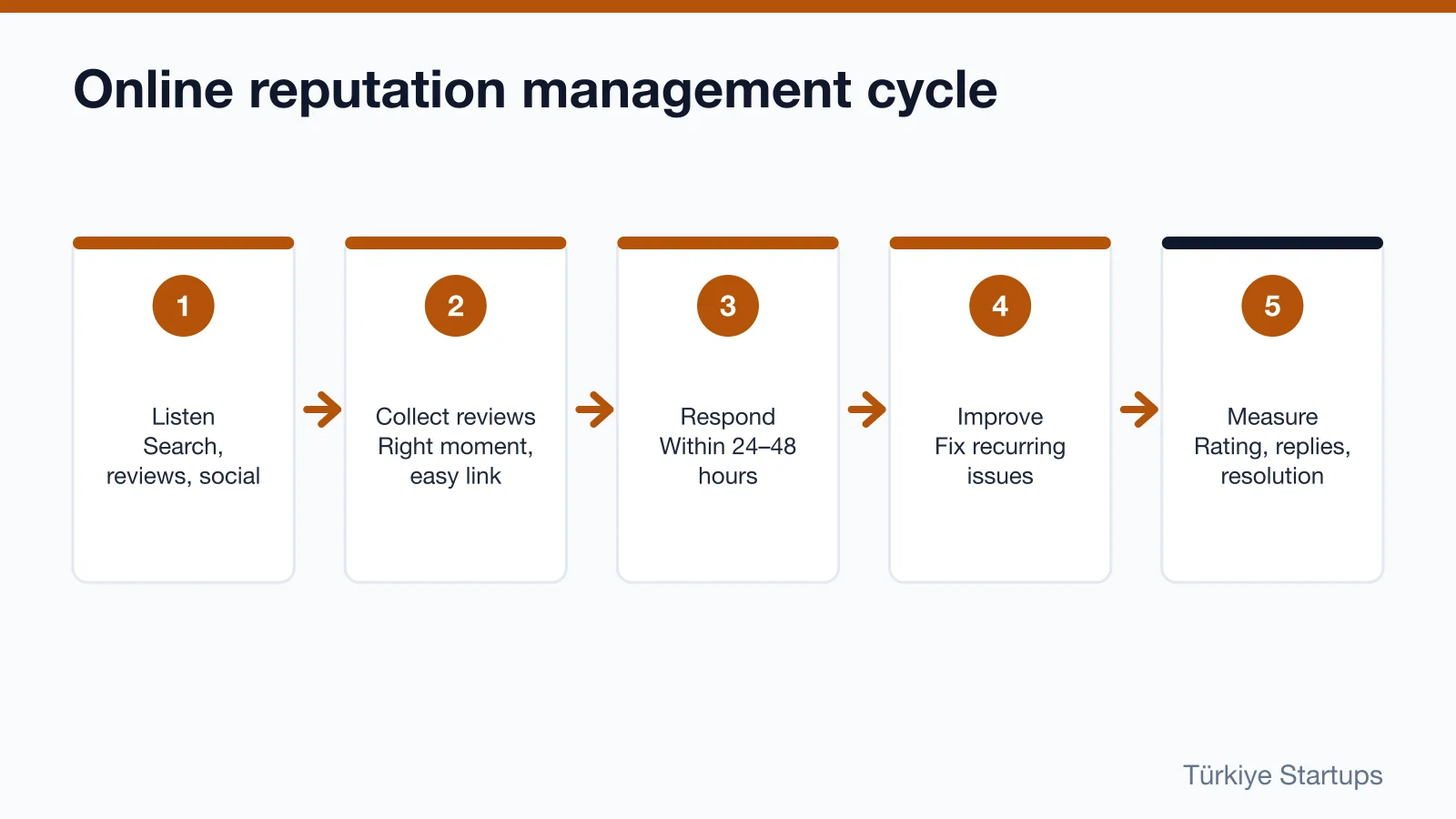
1. Listen first
Search your brand, product and founder names regularly; set up free alerts; route Google Business Profile, marketplace and social notifications to one owner; and keep a weekly report of new reviews, average rating, response time and open complaints. Start with creating a Google Business Profile.
2. Collect positive reviews systematically
Happy customers rarely write reviews unprompted. Ask at the moment of highest satisfaction, share a direct link or QR code, use a personal tone, and ask all customers, not only happy ones, since filtered review gathering can break platform rules. Measure satisfaction with surveys and NPS.
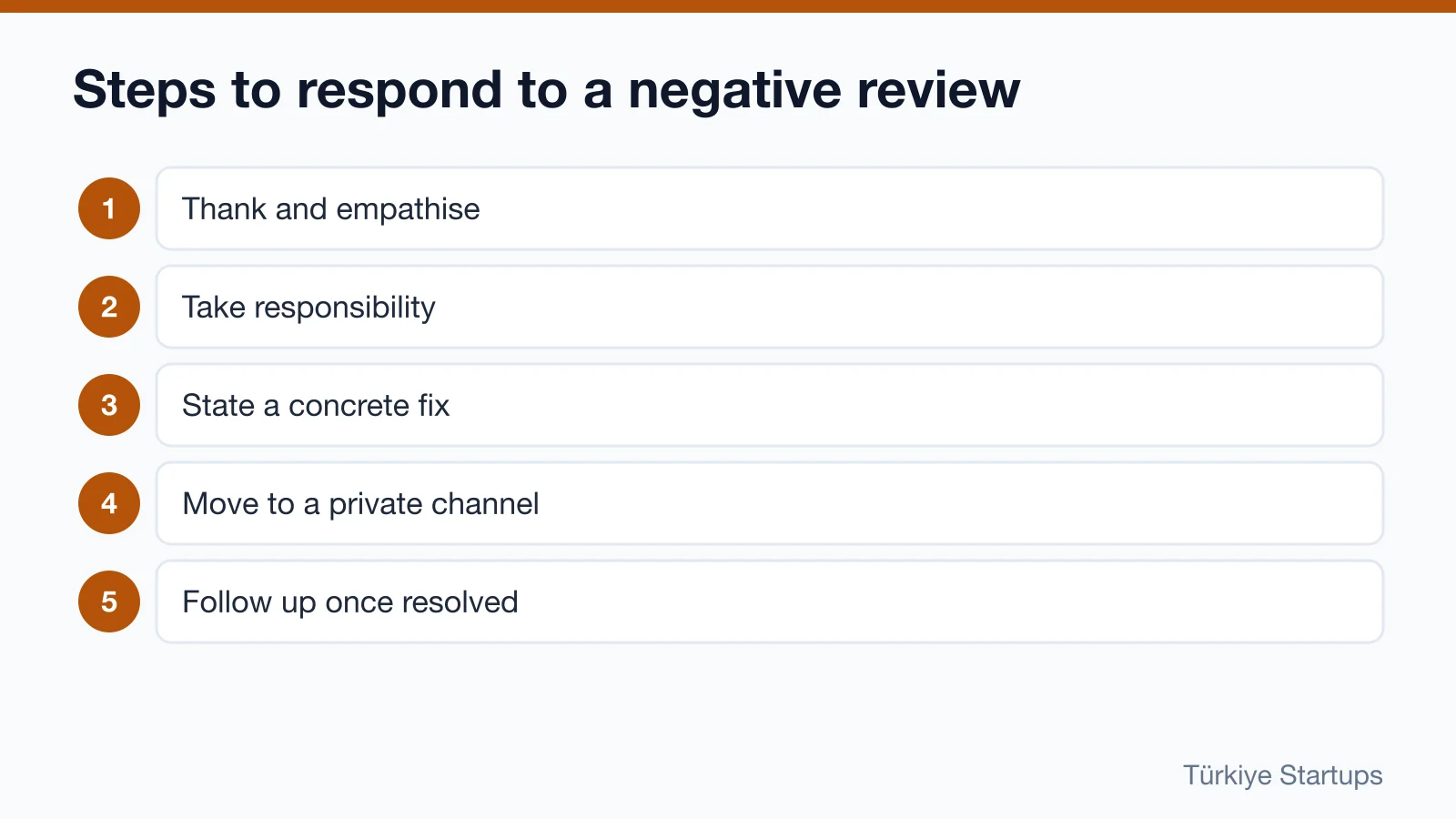
3. Respond well to negative reviews
Your reply is written for future customers reading it. Thank and empathise; take responsibility without excuses; state a concrete fix; move to a private channel without posting personal data; follow up once resolved.
| Don't | Do |
|---|---|
| Argue with the customer | Stay calm and professional |
| Paste the same template everywhere | Reply to the specific content |
| Share order or phone details | Invite them to a private channel |
| Leave it unanswered for days | Reply within 24–48 hours |
See our KVKK guide for personal data.
4. Complaint platforms
The real signal is the resolution rate and speed, not the complaint itself. Claim your business account, answer every complaint, record the resolution and feed recurring issues to the product team. See building customer support.
5. Stay away from fake reviews
Fake positive reviews, bought reviews or fake negative reviews on competitors can lead to removal, account closure and administrative sanctions as unfair commercial practices. Turkish rules on advertising and unfair practices include obligations on genuine consumer reviews; check current regulations. Incentivised reviews may need to be clearly disclosed.
6. Social media crises
Respond quickly with a short "we are looking into it"; gather the facts; speak with one voice; apologise and explain the fix if you were wrong; and do not delete criticism, which usually escalates things. See crisis management for startups.
7. Strengthen search results
Own page one for your brand by building strong, positive pages: your website, social profiles, press coverage, partner pages and platform profiles. A startup profile on Türkiye Startups adds another trusted result. Use press releases for newsworthy moments.
Measuring reputation
Monthly change in average rating and review count; response rate and time; complaint resolution rate; positive results on page one for brand searches; share of positive, neutral and negative mentions.
Frequently asked questions
What is online reputation management? Monitoring, improving and protecting your brand across search, reviews, complaint sites and social media.
Can a negative Google review be removed? Only reviews that break platform rules can be reported and removed; genuine experiences should get a good reply.
How fast should I reply? Ideally within 24–48 hours, faster for negative reviews.
Can I offer discounts for reviews? It depends on platform rules and law; incentives should be disclosed and fake reviews are prohibited.
Should I answer complaint sites? Yes; resolved complaints show you take responsibility.
Do I need an agency? Small businesses can run this system themselves; get help for major crises.
Conclusion
Reputation accumulates daily. Listen, ask for reviews, answer criticism calmly with solutions, avoid fake reviews and support brand searches with strong pages.
This guide is for general information only and is not legal, financial or investment advice. Check official sources and consult professionals for current terms.