How to close a company in Türkiye: liquidation of limited and joint-stock companies
A guide to closing a company in Türkiye: the liquidation resolution, the liquidator's duties, trade registry filings, the call to creditors and waiting period, tax and social security closure, deregistration, time and costs, options for indebted companies and closing a sole proprietorship.
By Editorial Team

Not every startup continues to grow. A pivot, merger, founder departure or the end of the business can mean closing the company. But closing a Turkish capital company is not like locking a shop: limited and joint-stock companies close through liquidation (tasfiye), a legal process that takes months. Companies that stop trading without completing it keep facing filing duties, fees and penalties. This guide walks through the process, which also applies to foreign-owned Turkish subsidiaries.
This content is for general information, not legal advice. Notice requirements, waiting periods and fees can change; run the process with a lawyer and accountant.
First: are there debts?
- Assets cover debts: ordinary liquidation.
- Debts exceed assets: liquidation is not possible; consider concordato or bankruptcy. See what is concordato.
Clarify tax, social security and bank debts before you start.
Liquidation step by step
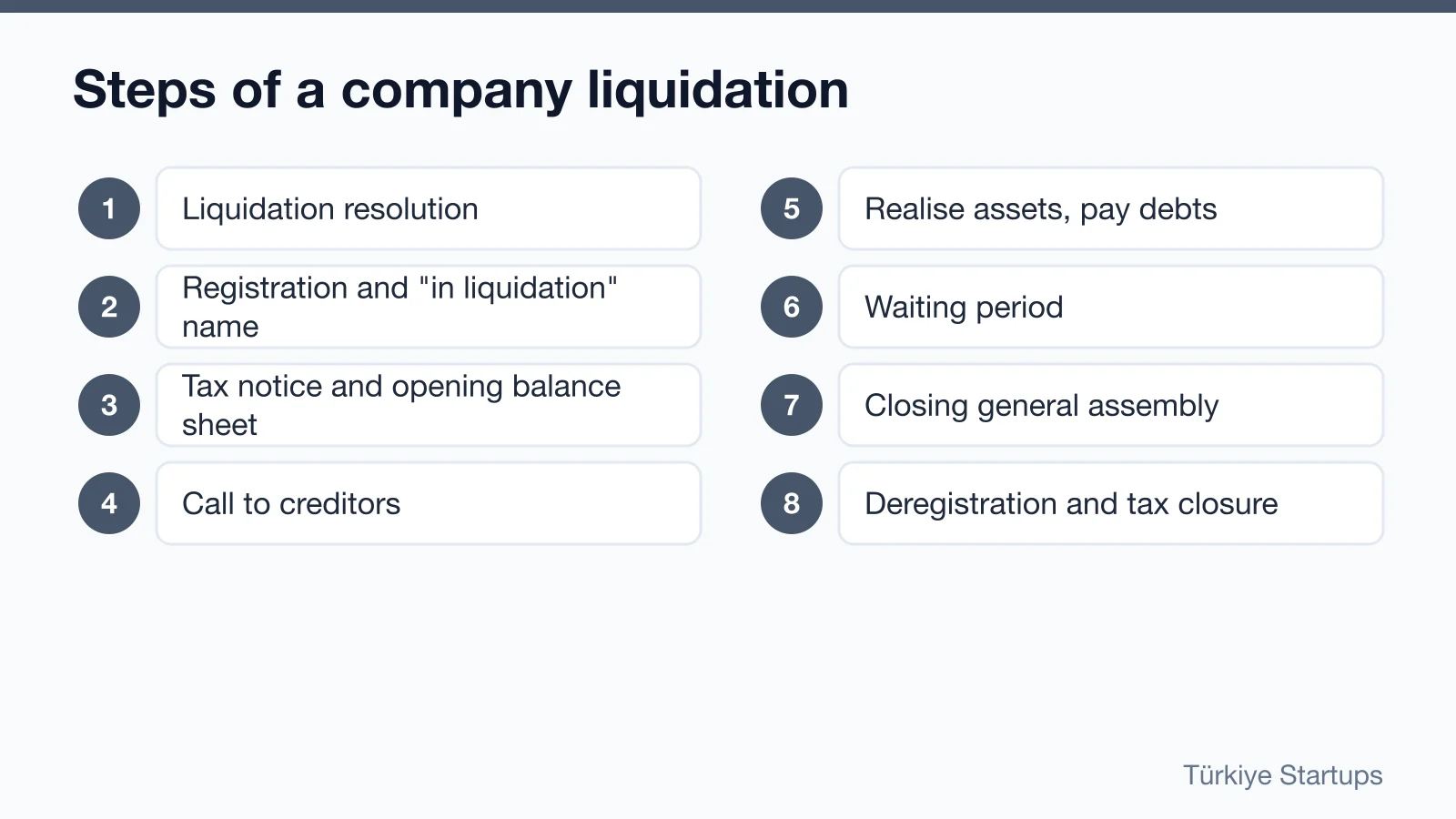
- General assembly resolution to enter liquidation and appoint one or more liquidators (a partner, manager or outsider).
- Registration and publication in the trade registry and Trade Registry Gazette; the name gains "in liquidation" (tasfiye hâlinde).
- Tax office notification and opening balance sheet, with a corporate tax return for the pre-liquidation period.
- Call to creditors by the legally required number of announcements in the Gazette and on the company website, plus written notice to known creditors.
- Liquidation work: finish ongoing business, collect receivables, sell assets, pay debts, close tax and social security obligations and end employment lawfully, including severance and notice pay (see severance pay). Filing obligations continue during liquidation.
- Waiting period: assets cannot be distributed before the statutory waiting period after the call to creditors (in practice usually six months).
- Distribution and closing: distribute remaining assets pro rata, prepare a closing balance sheet and hold a closing general assembly.
- Deregistration from the trade registry; once registered and published, legal personality ends.
- Tax and social security closure, including ending partners' Bağ-Kur coverage (see Bağ-Kur contributions).
- Record retention for the legal period (generally ten years), with a custodian named in the resolution.
Time and cost
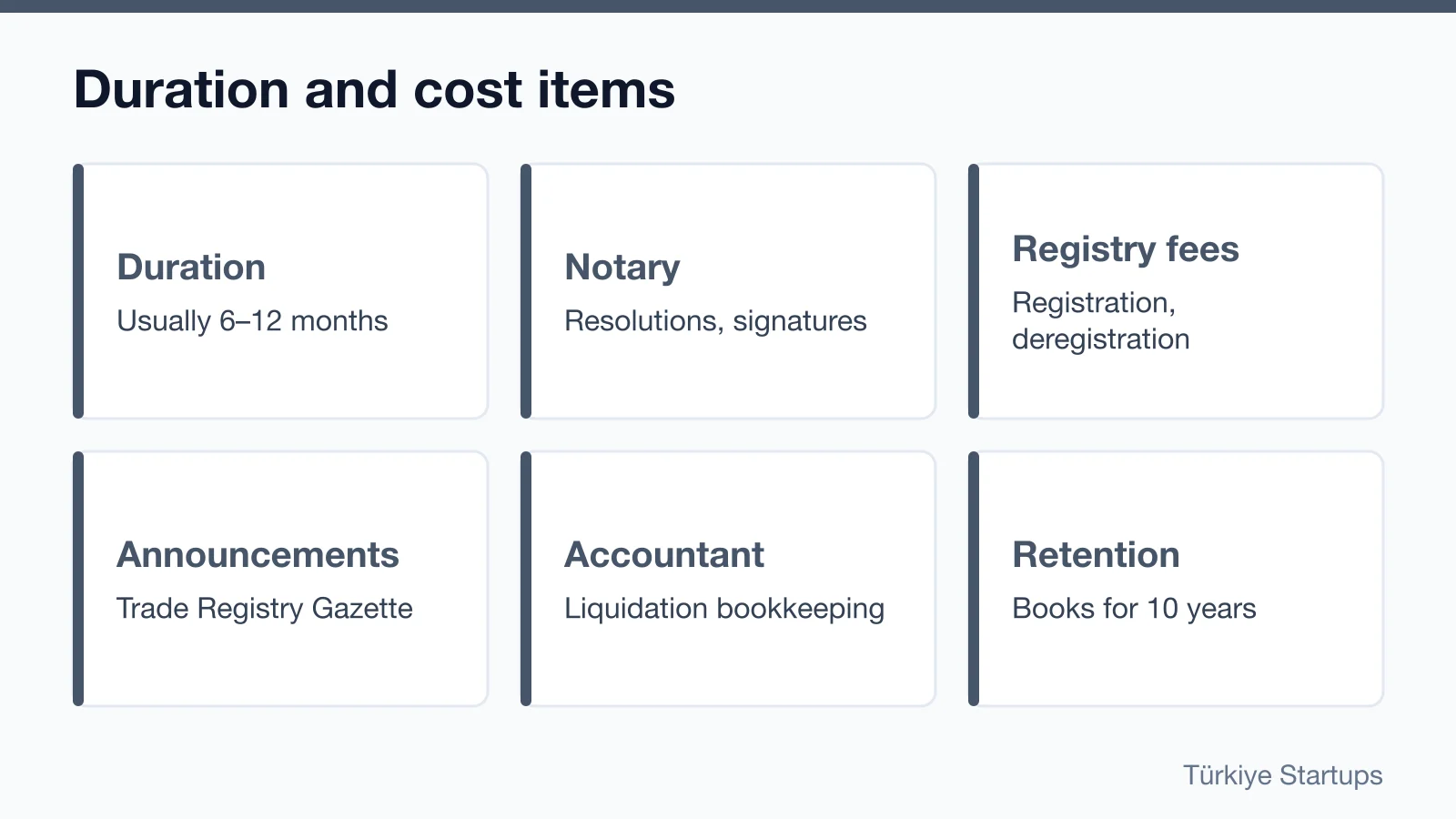
An ordinary liquidation usually takes six months to a year.
| Item | Note |
|---|---|
| Notary fees | Resolutions and signatures |
| Trade registry fees | Registration and deregistration |
| Gazette announcements | Liquidation and creditor notices |
| Accountant | Bookkeeping and returns during liquidation |
| Lawyer | If needed |
| Stamp duty and other taxes | Depending on documents |
Alternatives
A merger ends the company without liquidation; a sale of shares transfers the business (see exit strategies); a type change converts it. Ex officio deregistration rules can exist for long-inactive companies, but relying on them while ignoring obligations is risky. "Going dormant" does not end obligations for capital companies.
Closing a sole proprietorship
Much simpler: notify the tax office that you have ceased business (generally within a month), file final returns and pay debts, close chamber registration and check Bağ-Kur has ended. See sole proprietorship.
Common mistakes
- Stopping trading without closing formally
- Trying to liquidate an insolvent company
- Distributing assets before the waiting period
- Neglecting returns during liquidation
- Not settling employee claims
- Not keeping records
Frequently asked questions
How do I close a limited company? Assembly resolution, liquidator appointment, registration and publication, call to creditors, distribution after the waiting period and deregistration.
How long does it take? Usually six months to a year.
What does it cost? Notary, registry fees, announcements and accountant fees; totals depend on the company.
Can an indebted company be closed? Through liquidation if debts can be paid; otherwise concordato or bankruptcy.
Does a dormant company still file? Yes, until liquidation and deregistration are complete.
Is closing a sole proprietorship hard? No: a cessation notice, final returns and closing chamber registration.
Conclusion
Closing a company properly is the foundation for a fresh start. Clarify debts, follow every liquidation step, respect the waiting period and complete tax and social security closure. For your next venture, see why startups fail and when to pivot.
This guide is for general information only and is not legal, financial or investment advice. Check official sources and consult professionals for current terms.