How to bid in public tenders in Türkiye: EKAP registration, qualification and bids
A guide for startups and SMEs to Turkish public procurement: the Public Procurement Law basics, EKAP registration and e-signatures, procedures and direct procurement, qualification and experience documents, bid and performance bonds, preparing bids, contracts and complaints.
By Editorial Team

Municipalities, ministries, hospitals, universities and state companies in Türkiye buy huge volumes of goods, services and software every year. The public sector pays reliably, buys at scale and makes a strong reference. For a well-prepared startup, a first public contract can be a turning point for revenue and credibility. But public tenders follow strict rules: one missing document can exclude your bid. This guide covers the steps, documents and common mistakes.
This content is for general information only. Thresholds, bond rates and procedures are updated by law and by the Public Procurement Authority. In each tender, that tender's administrative specification and documents prevail.
What is public procurement?
Public bodies buy goods, services and works under the principles of competition, transparency and equal treatment. The core law is Public Procurement Law No. 4734, with contracts governed by Law No. 4735. Processes run on the Electronic Public Procurement Platform (EKAP) operated by the Public Procurement Authority (KİK).
What can startups sell?
Software development, licences and maintenance; data analytics, cybersecurity, cloud and digital transformation; training and consulting; medical and laboratory equipment; smart city, energy efficiency and environmental tech; design, content and events. For enterprise sales principles see building a B2B sales process and running a pilot with a corporate client.
Procedures
| Procedure | In short | For startups |
|---|---|---|
| Open tender | Anyone can bid | Most common; qualification is decisive |
| Restricted tender | Prequalification, then invited bidders | Specialised work |
| Negotiated procedure | Limited bidders under specific conditions | Urgent or special cases |
| Direct procurement | In listed cases and below set limits, without notice or bonds | The fastest entry point for small firms |
Direct procurement lets the authority buy directly after market research, mainly below annual monetary limits. It is a great way to build relationships and a first reference.
Step by step
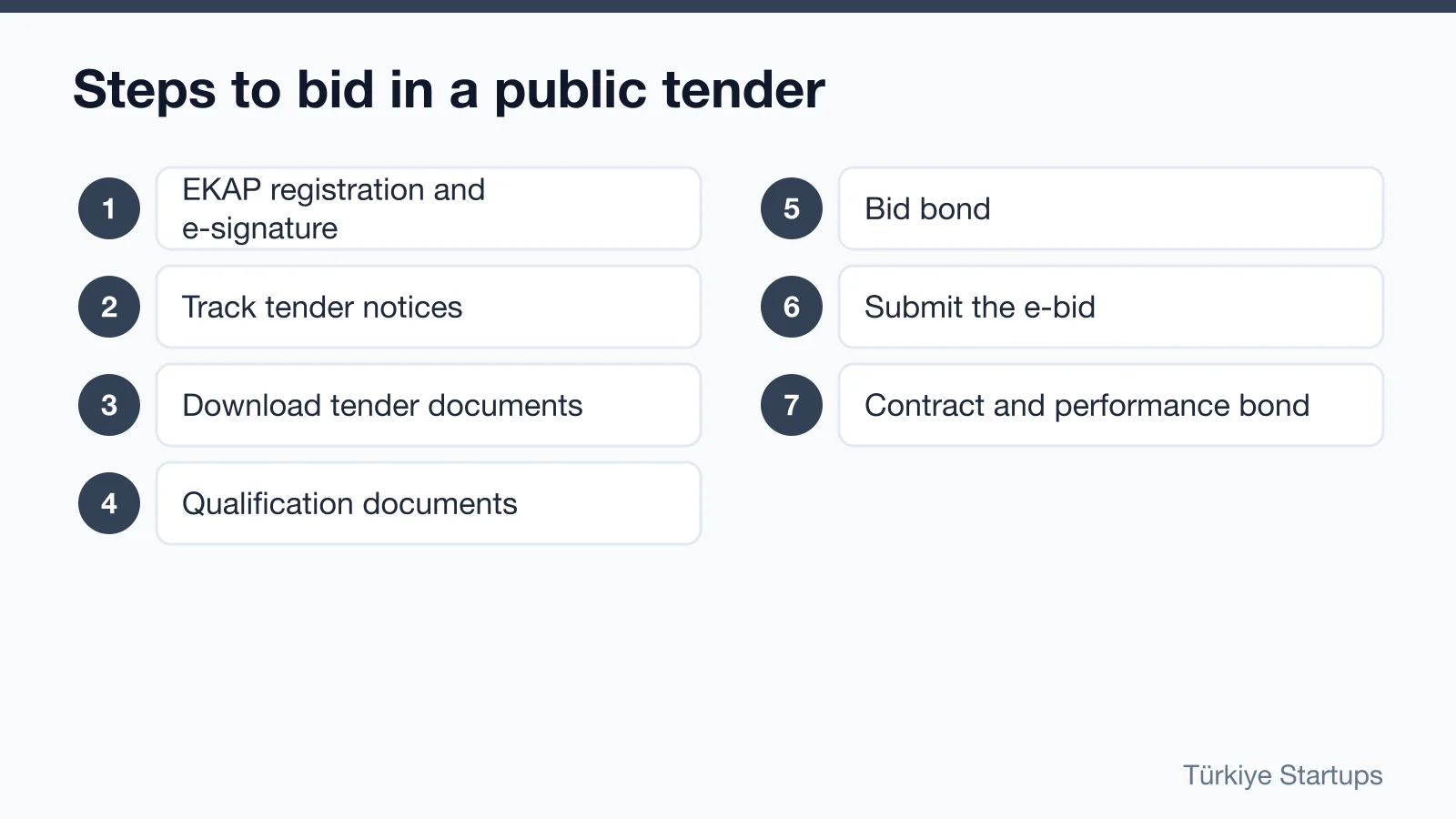
- Prepare your structure and paperwork. Individuals can bid, but most tenders effectively require a company (see limited vs joint-stock). No tax or social security debts is a common condition.
- Register on EKAP for your company and obtain a qualified electronic certificate (e-signature). Track tender notices by sector, province and authority.
- Download and study the tender documents (administrative and technical specifications, draft contract, unit price schedule) via EKAP with your e-signature. Turn the administrative specification into a line-by-line checklist.
- Prepare qualification documents: a bid letter in the standard format, a bid bond, registry records and signature circulars, a work experience certificate for similar work, financial standing (balance sheet, turnover) where requested, technical capacity (staff, equipment, quality certificates such as ISO; see ISO 27001 and SOC 2) and a joint venture declaration if relevant. Many documents are declared on EKAP, with originals requested from the winner; false declarations bring serious sanctions.
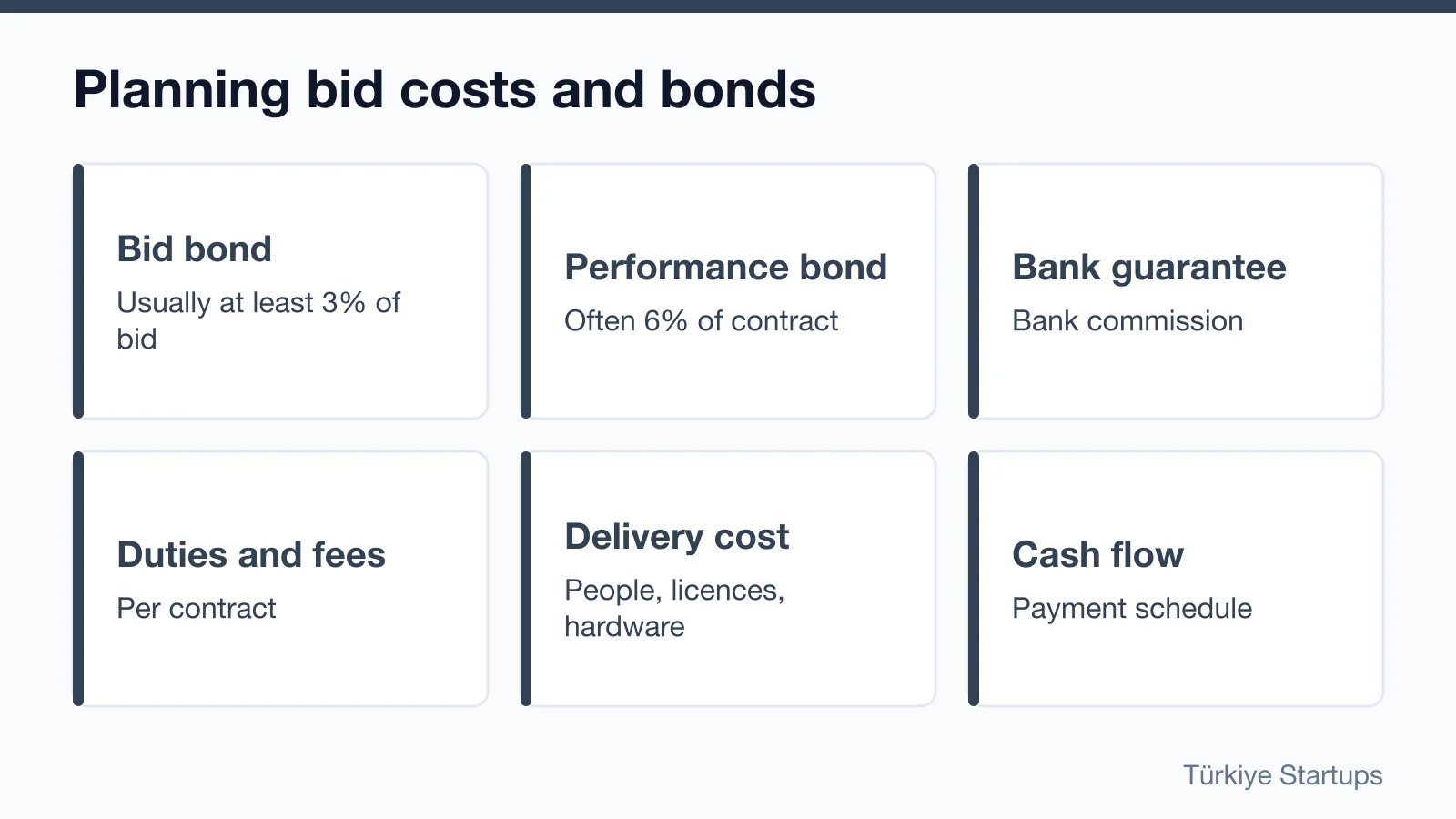
- Arrange bonds. The bid bond usually must be at least a percentage of your bid (3% in most tenders); the performance bond before signing is usually a percentage of the contract value (6% in most cases). Talk to your bank early; bond limits and fees affect cash flow (cash flow management).
- Price and submit. Cost everything (people, licences, hardware, travel, bond costs, taxes), keep margins realistic (abnormally low bids can be queried) and submit your e-bid on EKAP well before the deadline. Show amounts and VAT as the specification requires (how VAT works).
- Evaluation, contract and delivery. After qualification and price evaluation, the winner's documents are checked, the performance bond provided and the contract signed. Inspection and acceptance, progress payments and penalty clauses then matter.
No experience certificate yet? Focus on direct procurement first, form a joint venture with an experienced firm, or work as a subcontractor to larger contractors.
Advantages for domestic and small firms
Under certain conditions a price advantage for domestic bidders can apply, and rules may ease SME participation. Each tender's administrative specification states whether these apply; check requirements such as domestic goods certificates in advance.
Complaints
If you believe a step was unlawful, first complain to the contracting authority; if rejected, appeal to the Public Procurement Authority. Deadlines are short and fees apply; get a procurement lawyer.
Foreign companies
Foreign firms can bid in many tenders, often through a Turkish entity or with documents legalised and translated as the specification requires. See setting up a company in Türkiye as a foreigner.
Common mistakes
- Skimming the administrative specification
- A bid letter not in the standard format
- Wrong bid bond amount, validity or form
- Experience that does not match the "similar work" definition
- Submitting at the last minute
- Underpricing and winning loss-making work
- Forgetting to clear tax or social security debt
Frequently asked questions
Who can bid? Natural and legal persons and joint ventures meeting the specification; certain bans and debts can exclude you.
How do I register on EKAP? Register your company and use a qualified e-signature.
Can I bid without an experience certificate? Some tenders do not require one; direct procurement, joint ventures and subcontracting build experience.
How big is the bid bond? Usually at least 3% of the bid; check the specification.
What is direct procurement? Direct purchases in listed cases and below set limits, without notice or bonds.
How do I challenge a result? Complain to the authority first, then appeal to KİK; act fast.
Conclusion
Public procurement is a large, stable market for prepared startups. Register on EKAP, build references through small purchases, read specifications meticulously and price realistically. Sharpen enterprise sales with how to prepare a quote and handling objections.
This guide is for general information only and is not legal, financial or investment advice. Check official sources and consult professionals for current terms.