How to set up a cooperative in Türkiye: members, articles, steps and support
What a cooperative is and how it differs from a company, types of cooperatives in Türkiye, the minimum number of members, model articles of association, permit and registration steps, governance, distribution of surplus, women's cooperatives and support programmes.
By Editorial Team

Milk producers in a village building a shared cold chain, women in a district marketing handmade products together, small shopkeepers buying wholesale jointly, a group of designers running a shared workshop: in each case, people who are weak alone build economic strength together. That is what a cooperative is for. This guide covers what a cooperative is in Türkiye, how it differs from a company, the setup steps, governance and support.
This content is for general information only. The responsible ministry, model articles and application steps vary by cooperative type. Check the Ministry of Trade and relevant ministries for current procedures.
What is a cooperative?
A legal entity with variable membership and capital, set up so members can meet shared economic needs, particularly related to their work or livelihood, through mutual help, solidarity and guarantee. The core law is Cooperatives Law No. 1163. Principles include voluntary and open membership, democratic control (as a rule one member, one vote), members' economic participation (surplus shared in proportion to dealings with the cooperative), autonomy, education and cooperation.
Cooperative vs company
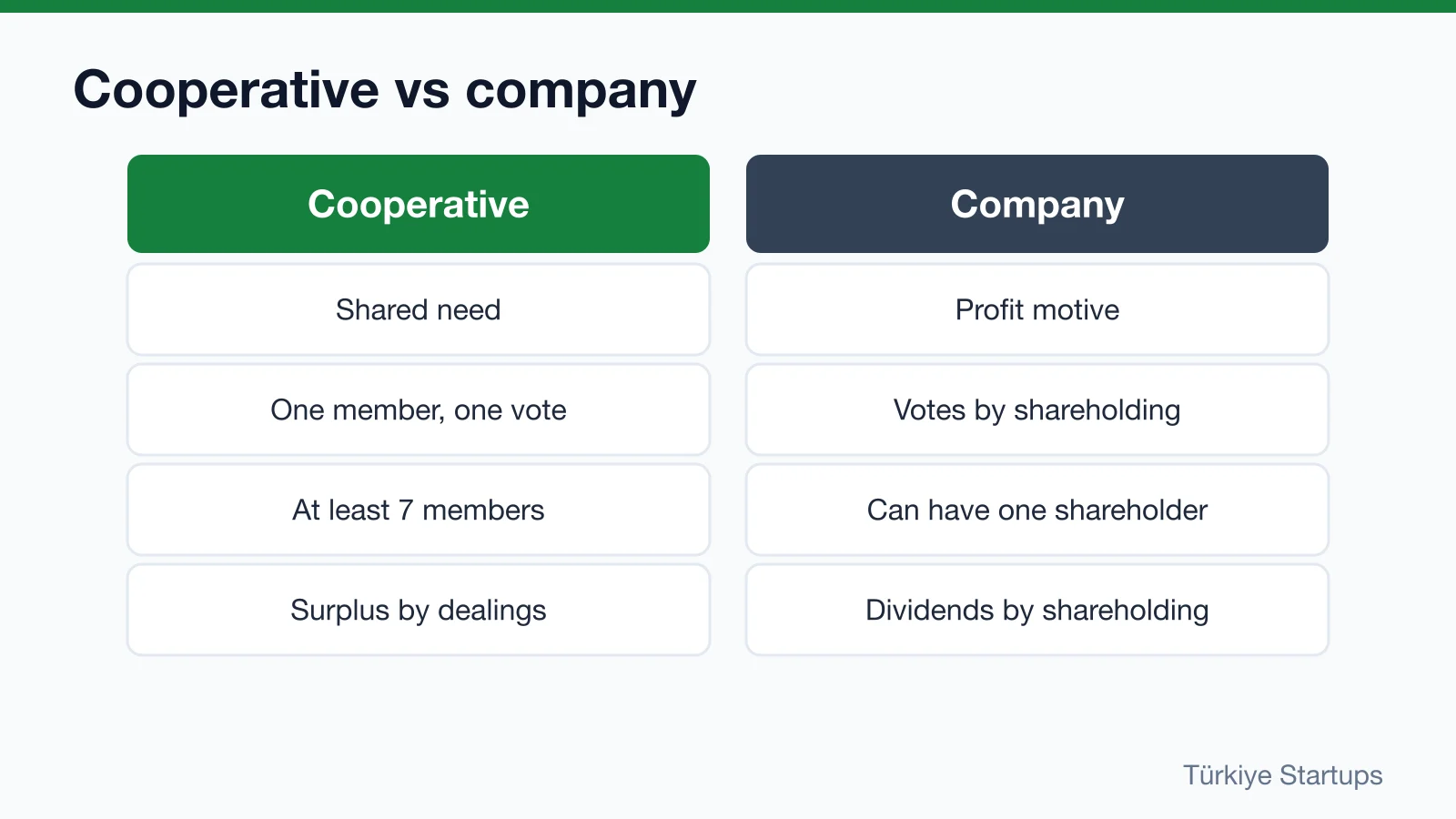
| Cooperative | Company (Ltd. / A.Ş.) | |
|---|---|---|
| Purpose | Meet members' shared needs | Make and distribute profit |
| Voting | One member, one vote | In proportion to shares |
| Founders | At least 7 members | Can be one shareholder |
| Capital | Variable as members join and leave | Fixed in the articles |
| Distribution | By members' dealings | By shareholding |
| Best for | Producer, consumer, trade communities | Growth- and investment-focused startups |
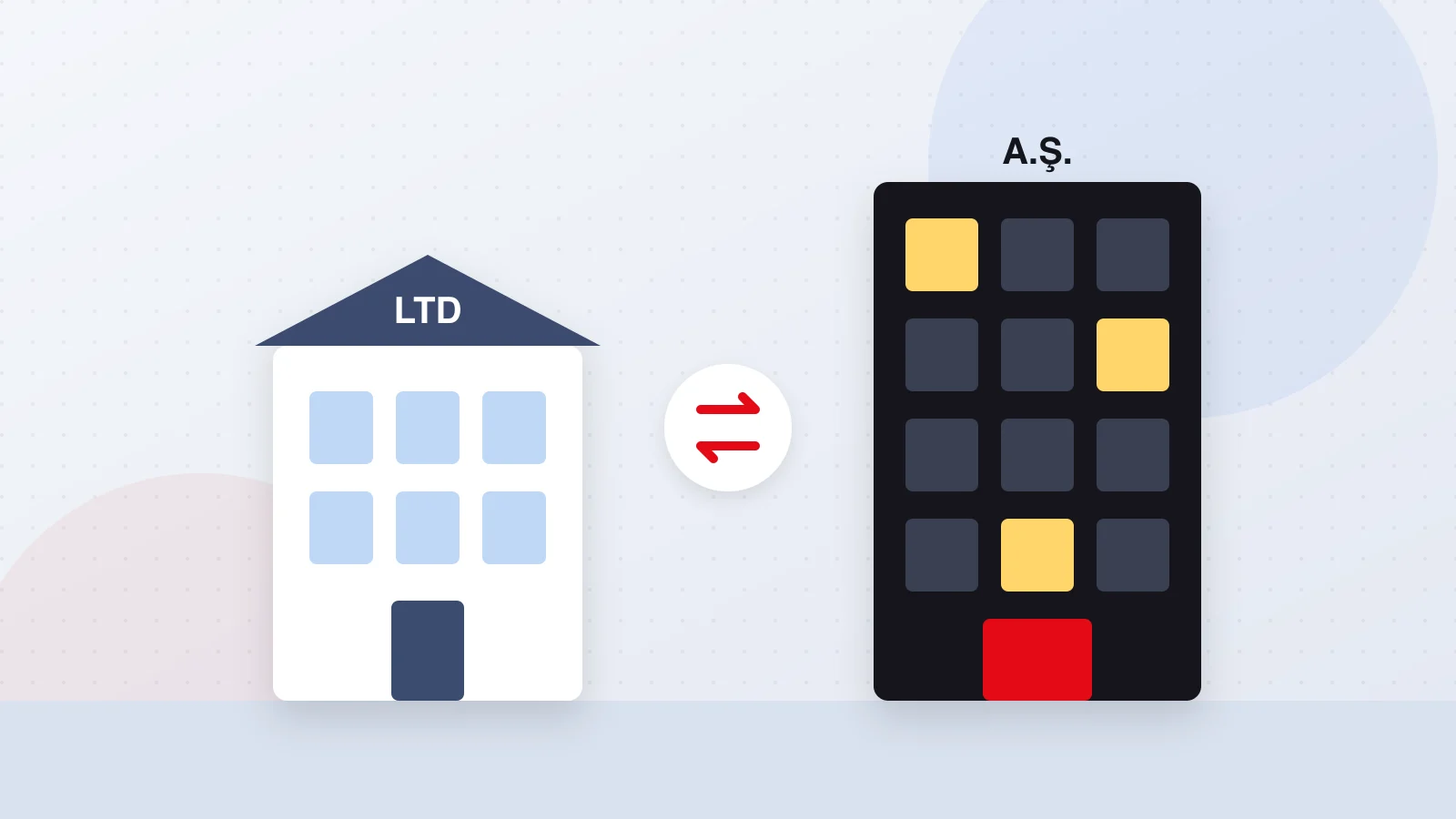
Startups aiming to raise capital and scale fast usually need a company; see limited vs joint-stock. For impact-first ventures, see what is social entrepreneurship.
Types
Agricultural development and producer cooperatives, consumer cooperatives, tradespeople's credit and guarantee cooperatives, housing cooperatives, women's enterprise and production cooperatives, transport, marketing and other service cooperatives. The responsible ministry and model articles vary: some agricultural cooperatives fall under the Ministry of Agriculture and Forestry, many others under the Ministry of Trade.
Setup steps
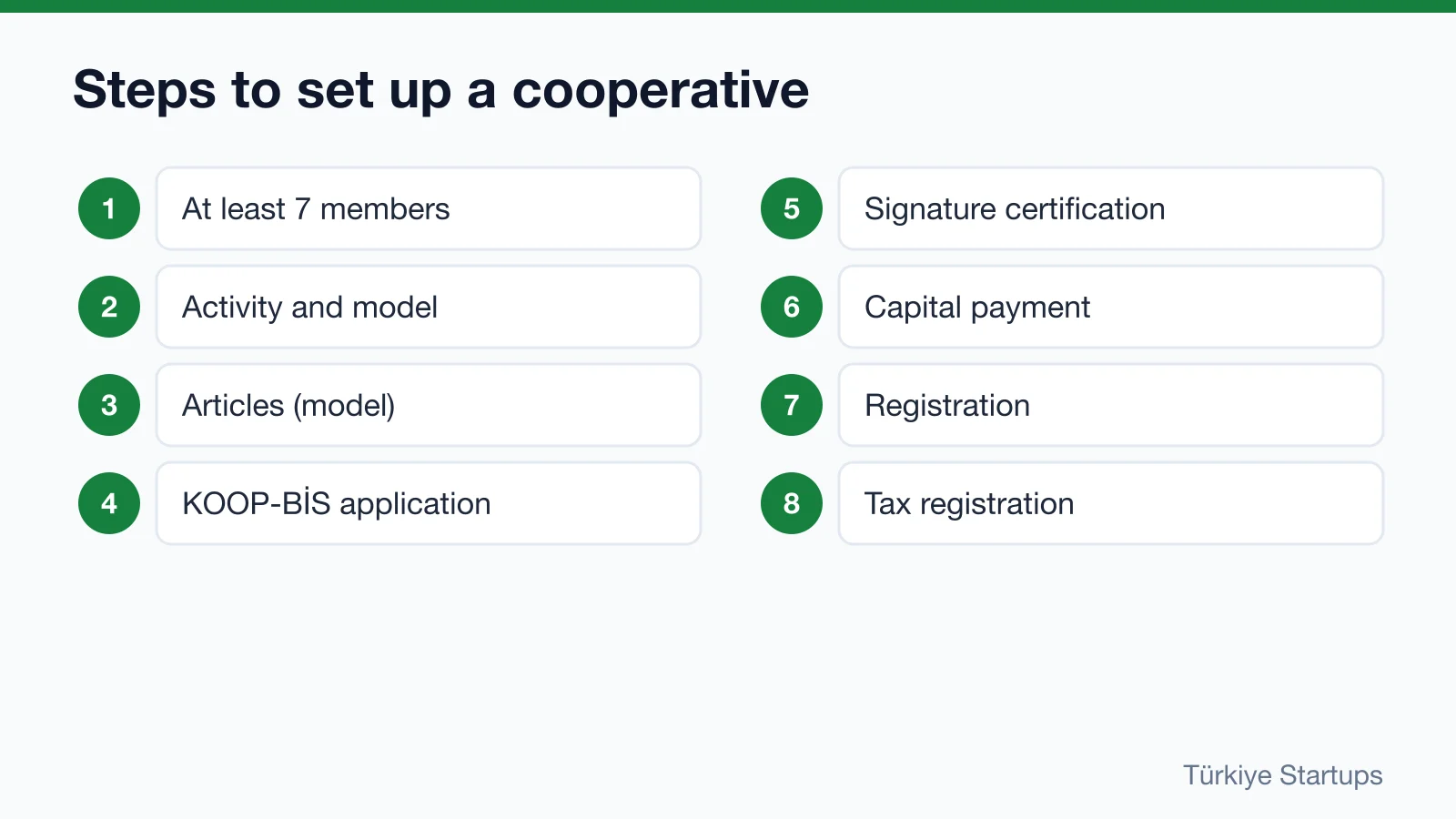
- Gather at least 7 members with a shared economic need related to the activity (natural persons, and legal persons under statutory conditions).
- Define the activity and model: how members benefit and where income comes from. Draft a simple plan; see how to write a business plan.
- Prepare the articles of association: name, seat, purpose, membership conditions, share amount and payment, bodies and duties, surplus distribution. The Ministry of Trade publishes model articles for many types.
- Apply: for cooperatives under the Ministry of Trade, setup largely runs through the Cooperative Information System (KOOP-BİS), where the articles are prepared and a founding permit requested.
- Certify signatures before a notary or trade registry office as required.
- Pay in capital as required by the articles, usually into a bank account in the cooperative's name.
- Register and publish in the trade registry; the cooperative gains legal personality on registration.
- Tax and other registrations, and an accountant for bookkeeping; see how to choose an accountant.
Governance
The general assembly of all members is the supreme body (articles changes, elections, accounts). The board of directors, at least three people, manages and represents the cooperative. A supervisory board or auditor reviews accounts and transactions. Hold assemblies under the procedural rules (such as ministry representative requirements), or decisions can be annulled.
Distributing surplus
Cooperatives usually speak of surplus rather than profit. After legal reserves, surplus can be shared in proportion to members' dealings with the cooperative, as set by the articles; a member delivering more produce to a marketing cooperative receives more.
Women's cooperatives
Women's cooperatives are increasingly common in Türkiye for producing and marketing handmade goods, food and services together, building economic independence and local development. Training, mentoring and grant programmes are announced from time to time by the Ministry of Trade, development agencies and international organisations. See support and finance for women entrepreneurs, and for selling online, marketplaces and e-export.
Support
Ministry of Trade cooperative support programmes (project-based grants, opened periodically), Ministry of Agriculture and Forestry programmes for agricultural cooperatives, regional development agency grants and some KOSGEB programmes. Follow calls on our opportunities page and grants guide.
Common mistakes
- Founding without a clear shared need and model
- Articles that do not fit the activity
- Improper general assemblies
- Neglected bookkeeping
- Passive members and work falling on a few people
- No marketing or sales plan
Frequently asked questions
How many members are needed? At least seven.
Where do I apply? For Ministry of Trade cooperatives, through KOOP-BİS; some types fall under other ministries.
How are votes allocated? As a rule, one member, one vote, regardless of share amount.
Can a cooperative distribute profit? After legal reserves, surplus can be distributed by members' dealings, per the articles.
Cooperative or company? A cooperative suits communities organised around a shared need; a company suits ventures raising investment to grow fast.
Are there grants for women's cooperatives? Programmes open periodically from the Ministry of Trade, development agencies and international organisations.
Conclusion
A cooperative is a long-established, democratic way for small producers and entrepreneurs to gain strength together. Clarify the shared need, adapt the model articles, complete every setup step and run the cooperative like a professional business. See also community-led growth.
This guide is for general information only and is not legal, financial or investment advice. Check official sources and consult professionals for current terms.