What is social entrepreneurship? Impact-driven business models and funding
What social entrepreneurship is, how it differs from classic startups and NGOs, social enterprise business models, impact measurement, funding sources, legal structures and steps to start.
By Editorial Team
Social entrepreneurship is a type of entrepreneurship that aims to solve a social or environmental problem through a sustainable business model. Social enterprises earn income by selling products or services rather than depending on donations, and use that income to grow their mission. From education to employment, climate to health, food waste to the inclusion of people with disabilities, social enterprises are both creating impact and building businesses that last. In this guide we cover what social entrepreneurship is, its business models, impact measurement and funding sources.
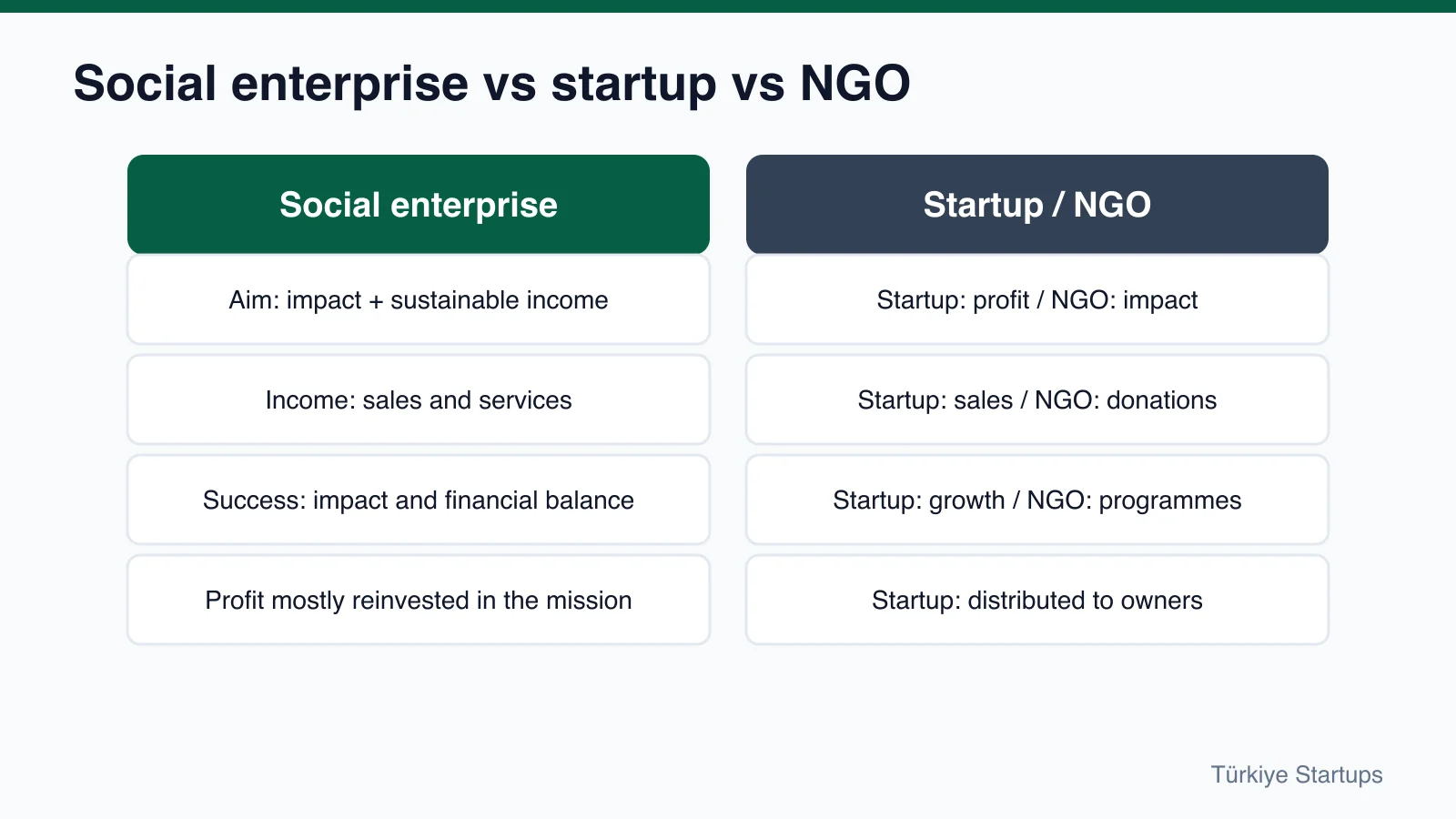
Key traits of a social enterprise
- Social or environmental mission: Its reason for existing is to solve a specific problem.
- Revenue model: It earns sustainable income by selling products or services.
- Impact measurement: It measures success not only by profit but by the change it creates.
- Use of profit: Profit is mostly reinvested in the mission.
- Stakeholder focus: Beneficiaries, employees and the community matter in decisions.
Social enterprise business models
1. Employment model
Enterprises that employ disadvantaged groups (e.g. people with disabilities, women, young people, refugees) and sell what they produce.
2. Beneficiary-as-customer model
Enterprises offering affordable products or services to low-income groups (affordable education, health, energy).
3. Cross-subsidy (buy one, give one)
Income from customers who can pay funds free or discounted services for those in need.
4. Market linkage model
Platforms connecting small producers, cooperatives or artisans to markets; see marketplace startups.
5. Environmental solution model
Commercial solutions to environmental problems such as waste reduction, recycling and energy efficiency; see climate tech startups and food tech.
6. Service contract model
Enterprises selling social services to public bodies or large companies.
Measuring impact
A social enterprise's most important difference is being able to measure its impact. A theory of change is used for this:
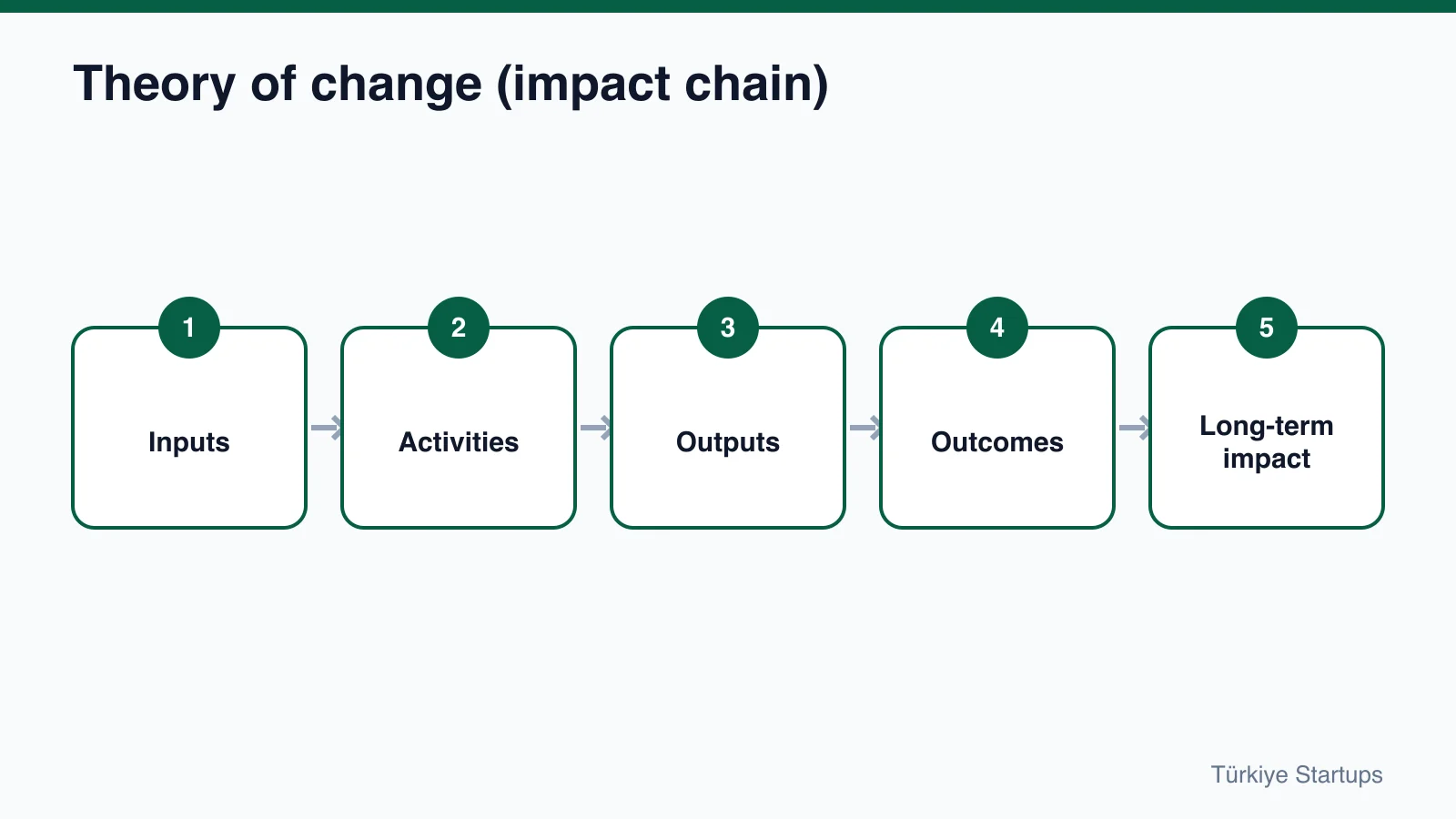
- Inputs: Money, team, partners.
- Activities: What do you do? (training, selling products)
- Outputs: Direct, countable results (number of people trained).
- Outcomes: Change in beneficiaries' lives (people who found jobs, income gains).
- Long-term impact: Change at a societal level.
- Set 3–5 impact indicators from the start.
Tips:
- Collect both quantitative (numbers) and qualitative (stories) data.
- Measure baselines where possible and compare.
- Report impact transparently to investors and customers.
The KPI guide is a good starting point for choosing indicators.
Funding sources
- Revenue: Sales and services; the foundation of sustainability.
- Grants and support: Social-impact programmes of national and international organisations; see grants and support programmes and writing a grant application.
- Impact investment: Investors seeking measurable social impact alongside financial return.
- Corporate partnerships: Companies' social responsibility and supply programmes; see corporate partnerships.
- Crowdfunding: Funding from a community that believes in the mission; see crowdfunding.
- Awards and competitions: See startup competitions.
Legal structure options
Social enterprises can be set up with different legal structures depending on the country: a company (limited or joint-stock), a cooperative, or an association or foundation's commercial arm. Each has different consequences for tax, governance, profit distribution and access to funding. Work with a legal and financial advisor to choose; see choosing a company type.
Steps to start a social enterprise
- Understand the problem deeply: Talk to beneficiaries; see design thinking.
- Design the solution and business model: Who pays, who benefits? See the Business Model Canvas.
- Write the theory of change.
- Test with a small pilot: See the Lean Startup.
- Measure impact and financial indicators.
- Set up the legal structure and plan funding.
- Scale through partnerships.
Challenges
- Balancing mission and revenue: Profit pressure can cause mission drift.
- The difficulty and cost of measuring impact.
- Access to funding: Conventional investors may be wary of lower return expectations.
- Scaling: Growing local impact takes time and partnerships.
FAQ
Can a social enterprise make a profit? Yes; profit is needed for sustainability. The difference is that profit is largely reinvested in the mission.
How does a social enterprise differ from an NGO? NGOs usually run on donations and grants; social enterprises earn a significant share of income from sales.
Is a special legal status needed? It varies by country; many social enterprises are set up as normal companies or cooperatives.
Conclusion
Social entrepreneurship is a powerful way to solve social problems with sustainable business models. Understand the problem with beneficiaries, build a solid revenue model, measure your impact and grow through partnerships. For an overview of types of entrepreneurship, see our who is an entrepreneur article.
This guide is for general information only and is not legal, financial or investment advice. Check official sources and consult professionals for current terms.