Contract manufacturing in Türkiye: building your own brand with private label production
What contract manufacturing (fason üretim) is, private versus white label, comparison with owning a factory, sectors where it is common in Türkiye, permit and registration duties in cosmetics and food, choosing a manufacturer, cost items, the step-by-step process and contract clauses.
By Editorial Team

You want to launch your own cosmetics, supplement, apparel or cleaning brand but lack the capital and time to build a factory. Contract manufacturing (fason üretim) lets you make products under your brand in another company's facilities. Türkiye has strong contract capacity in textiles, cosmetics, food and chemicals, which also attracts foreign brands looking for nearshoring. This guide covers what it is, benefits, permits, costs and contract terms.
This content is for general information only. Permits, registration and labelling rules for cosmetics, food, supplements and medical products are strict and change; follow current regulations from the relevant ministries.
What is it?
The brand owner has another manufacturer produce products to its design, formula or specification, delivered with the brand's labels and packaging and sold under the brand's name.
| Term | Meaning |
|---|---|
| Contract manufacturing | Production to your design or formula |
| Private label | The manufacturer's existing product, slightly adapted, sold under your brand |
| White label | The same product sold to many brands with different labels |
| Partial contract work | Outsourcing one stage such as sewing, dyeing or filling |
Contract vs own factory
| Contract manufacturing | Own factory | |
|---|---|---|
| Upfront investment | Low | High |
| Time to market | Fast | Slow |
| Unit cost | Can be higher | Falls with scale |
| Control | Limited, contractual | Full |
| Flexibility | Easy to change products | Changes are costly |
| Minimum orders | Set by the manufacturer | Your decision |
| Know-how | You use theirs | You build your own |
It lets you put capital into marketing and brand during validation and early growth; owning production can come later. See what is an MVP and bootstrapping.
Common sectors in Türkiye
Textiles and apparel (cutting, sewing, printing, embroidery, full package), cosmetics and personal care, food and supplements, cleaning and chemical products, furniture and home goods, packaging and printing.
Permits and registration
As the brand placing products on the market, some duties are yours even if someone else manufactures:
- Cosmetics: product notification to the relevant authority, a safety assessment and a responsible person; check the manufacturer's site permits.
- Food and supplements: registration and product approval or notification under Ministry of Agriculture and Forestry rules, with strict labelling.
- Textiles: fibre content and care labelling.
- Electrical and other goods: conformity marks such as CE.
- Trademark: register before production; see trademark registration.
Build a regulatory checklist with an adviser or the manufacturer's regulatory team before production.
Choosing a manufacturer
Sector expertise; certificates (production permits, ISO, GMP for cosmetics and supplements, hygiene); R&D and formulation support; low MOQs for first runs; quality control (batch analysis, retained samples, defect rates); lead times and capacity; references and factory visits. See finding suppliers and manufacturers.
Cost items
Unit production (materials and labour), packaging, one-off tooling and setup, formulation and sample fees, tests (stability, safety, microbiology), regulatory costs, logistics and storage.
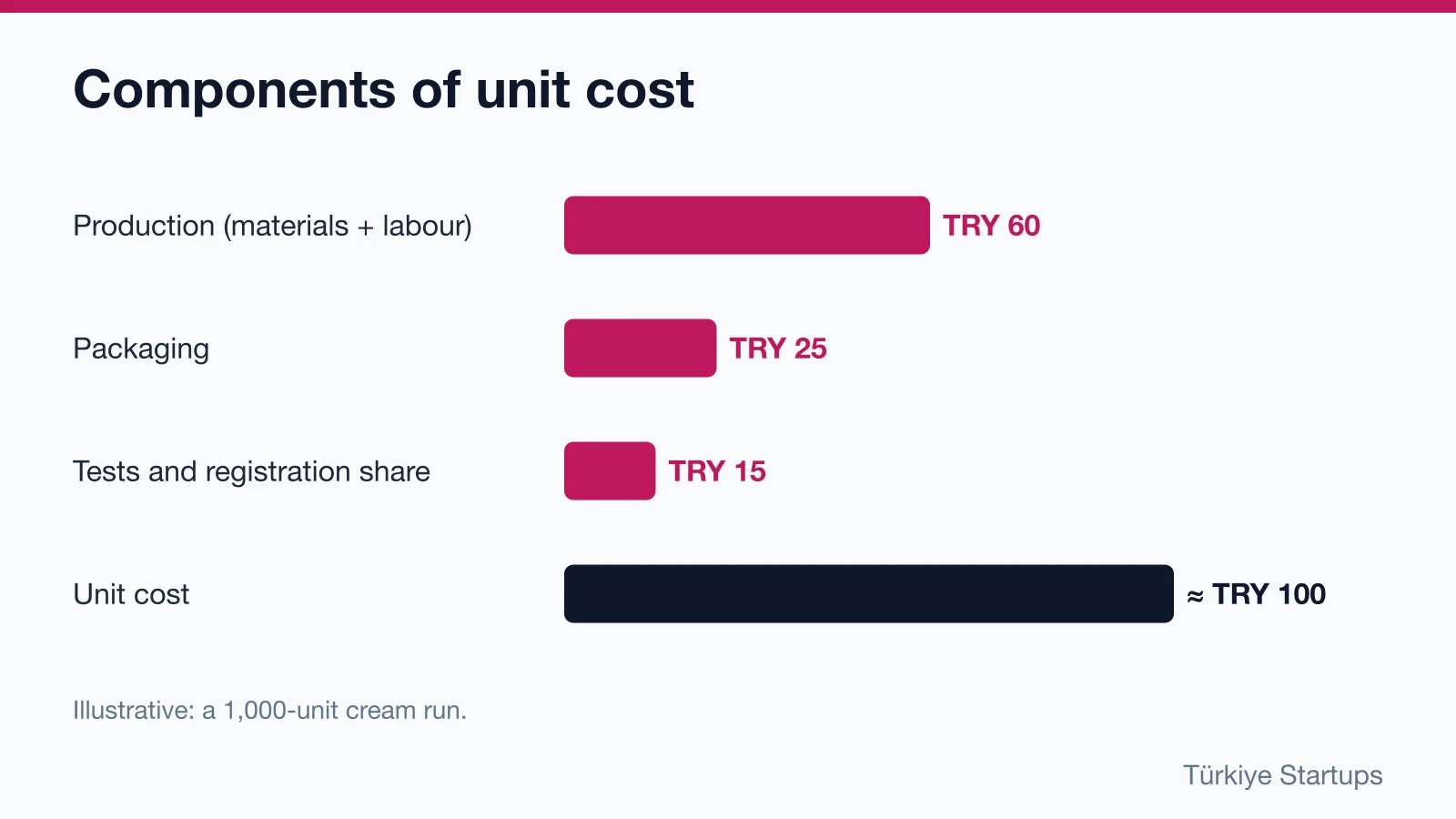
Example (illustrative): 1,000 units of a cream at TRY 60 production, TRY 25 packaging and TRY 15 of tests and registration per unit costs about TRY 100 per unit. Price after marketplace fees, shipping, ads and VAT; see profit margin. Contract manufacturing is invoiced as a service, and VAT withholding can apply in some sectors; see how VAT works.
The process
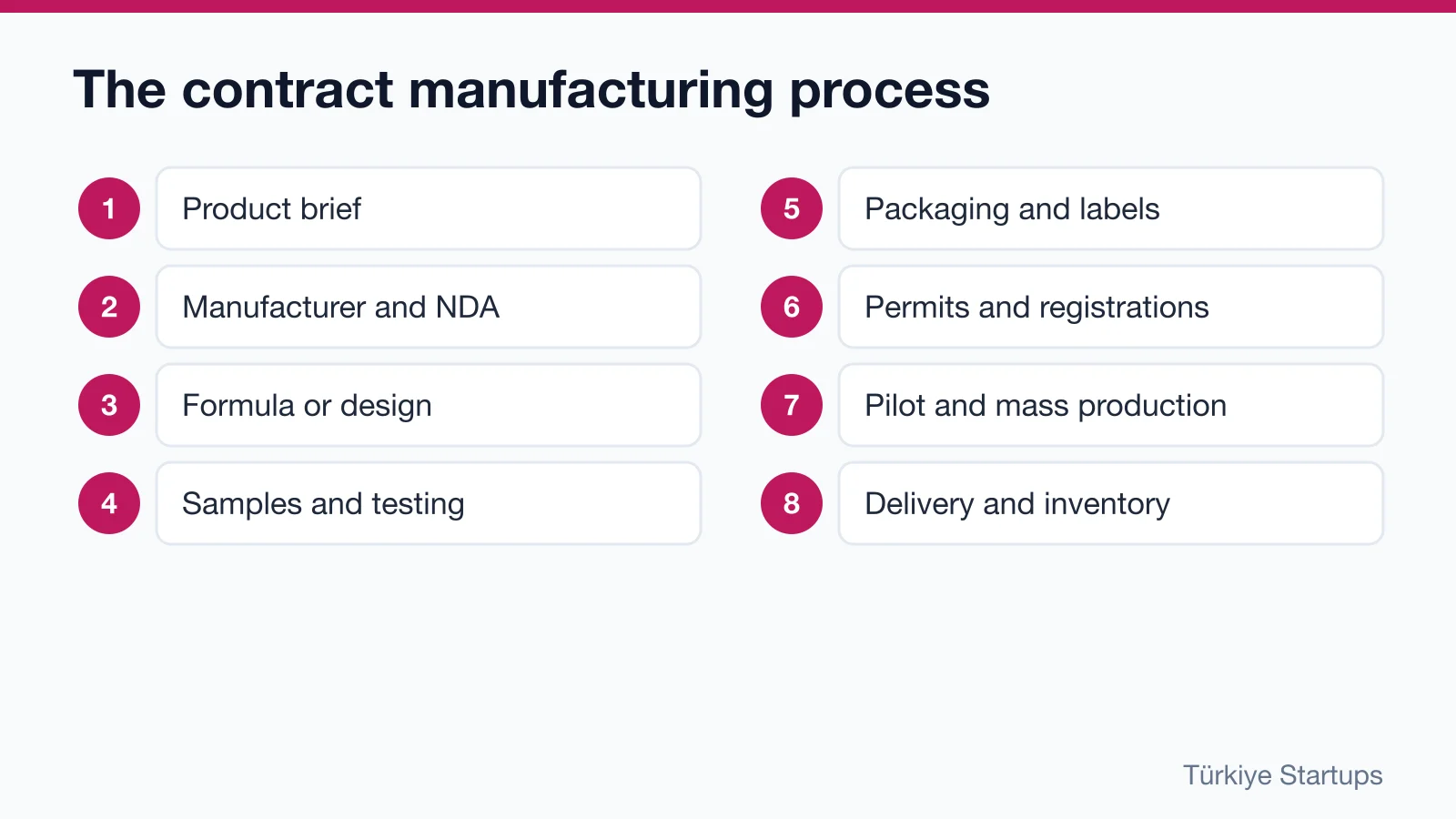
Product brief; manufacturer selection and NDA (see NDAs); formulation or design; samples and user testing; packaging and legally compliant labels; permits and registrations; pilot run and approval sample; mass production and QC; delivery and inventory (see inventory management).
Contract essentials
Ownership of the formula and design (can you take it if you switch manufacturer?); confidentiality and non-compete on your formula; quality standards and acceptance; prices, raw material increases and currency; lead times and penalties; defects, recalls and liability; exclusivity and termination. See service agreements.
Frequently asked questions
What is contract manufacturing? Having another manufacturer produce your designed or formulated products under your brand.
Private label vs contract manufacturing? Private label sells the manufacturer's existing product under your brand; contract manufacturing produces to your design or formula.
Do I need a company? Yes, to place products on the market, invoice and register them. Foreign brands can work through a Turkish entity or importer; see setting up a company in Türkiye.
Which permits for cosmetics? Manufacturer site permits plus product notification, safety assessment and a responsible person; check current rules.
What is the minimum order? It varies; negotiate low MOQs for first runs.
How do I protect my formula? NDAs, ownership and non-compete clauses, and keeping critical parts in-house where possible.
Conclusion
Contract manufacturing is the most practical way to launch your brand without a factory. Choose the right partner, plan permits and labelling early, cost every unit and protect your formula and design by contract. For sales channels, see selling on Instagram and selling on Amazon.
This guide is for general information only and is not legal, financial or investment advice. Check official sources and consult professionals for current terms.


