Digital transformation for SMEs: where to start and which steps to take
The SME digital transformation journey: current-state analysis, prioritisation, digitising sales, operations, finance and customer processes, AI, cybersecurity, team and budget.
By Editorial Team

Digital transformation is not just buying new software; it is the process of making a business's sales, operations, finance and customer relationships more efficient, measurable and scalable with digital tools and data. Although seen as million-dollar projects for big companies, small and medium-sized enterprises (SMEs) can transform gradually with the right steps and small budgets. In this guide we cover where SMEs should start their digital transformation, which tools fit which areas and common mistakes.
Why digital transformation?
- Efficiency: Less time and fewer errors in repetitive work.
- Customer experience: Fast replies, online sales, easy payment.
- Data-driven decisions: Seeing sales, stock and finance data in real time.
- Scalability: Managing more work with the same team.
- Competition: Keeping up with digitising customers and rivals.
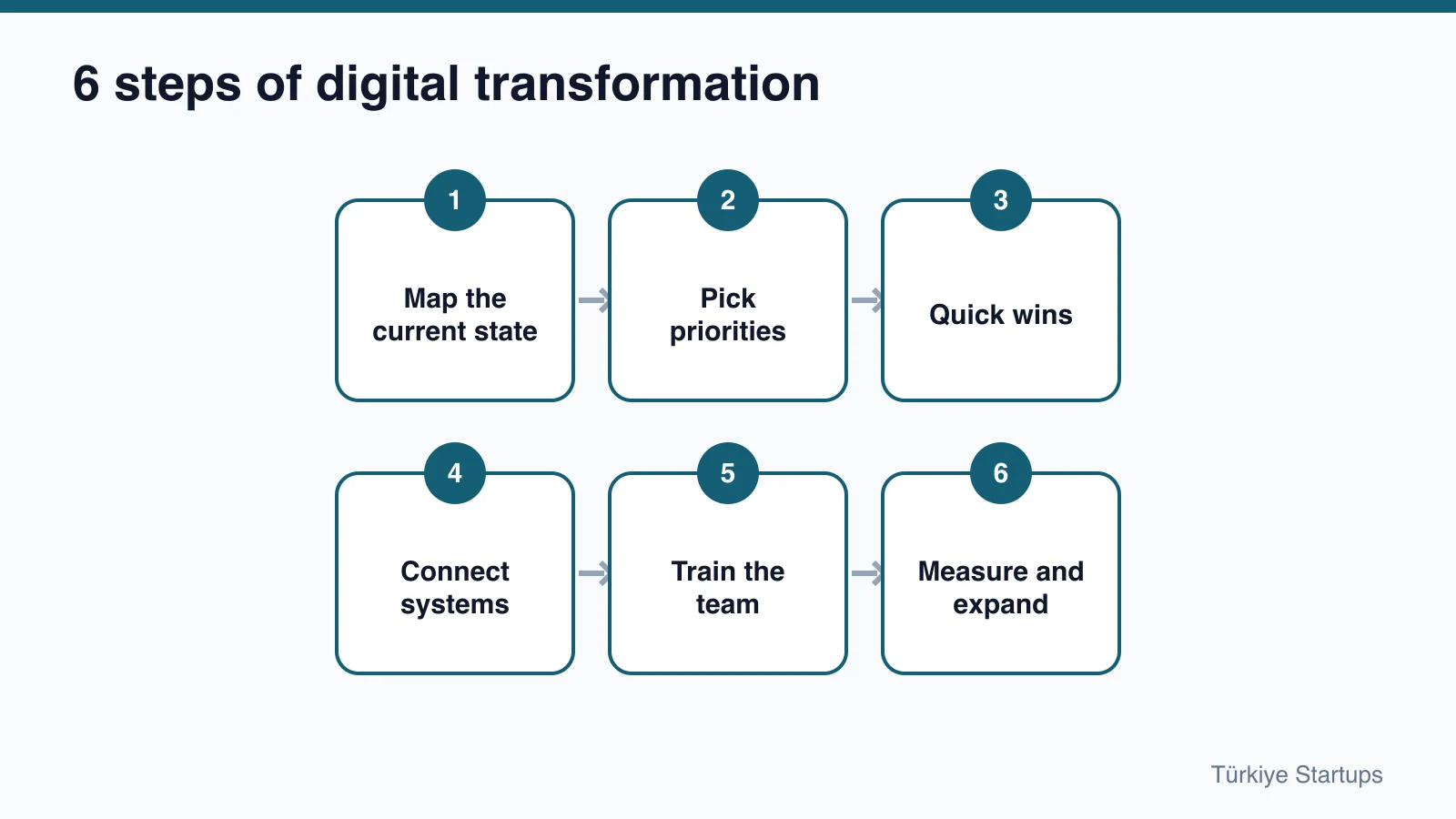
Step 1: Map the current state
List the business's core processes and ask for each:
- How is this work done (paper, spreadsheet, email, software)?
- How long does it take and what errors occur?
- Where is the data for this process kept?
Typical processes: Quotes and sales, orders and stock, invoicing and collections, accounting, HR, customer service, marketing, reporting.
Step 2: Set priorities
Assess each process on two criteria: impact (time, cost, revenue, customer satisfaction) and ease of implementation (cost, time, team fit). Start with high-impact, easy ones. For a strategic frame you can run a SWOT analysis.
Digitising area by area
Sales and marketing
- Website and online visibility; see small-business website.
- Online sales and marketplaces; see the online selling guide.
- Customer and sales tracking with a CRM; see choosing a CRM.
- Digital marketing and email; see SME digital marketing.
Operations
- Stock and order management software
- Task and project management tools; see Scrum and Kanban.
- Appointment and booking systems
- Digitising supplier and purchasing processes
Finance
- Pre-accounting and cloud accounting software
- Moving to e-invoicing and e-archive; see what are e-invoice and e-archive.
- Online collections and payment links
- Cash flow and budget tracking; see cash flow management.
Customer service
- A single support channel and ticketing system
- FAQs and canned replies
- AI-assisted first-line support; see AI customer service.
Human resources
- Leave, shift and payroll tracking
- Digital hiring and training; see HR tech.
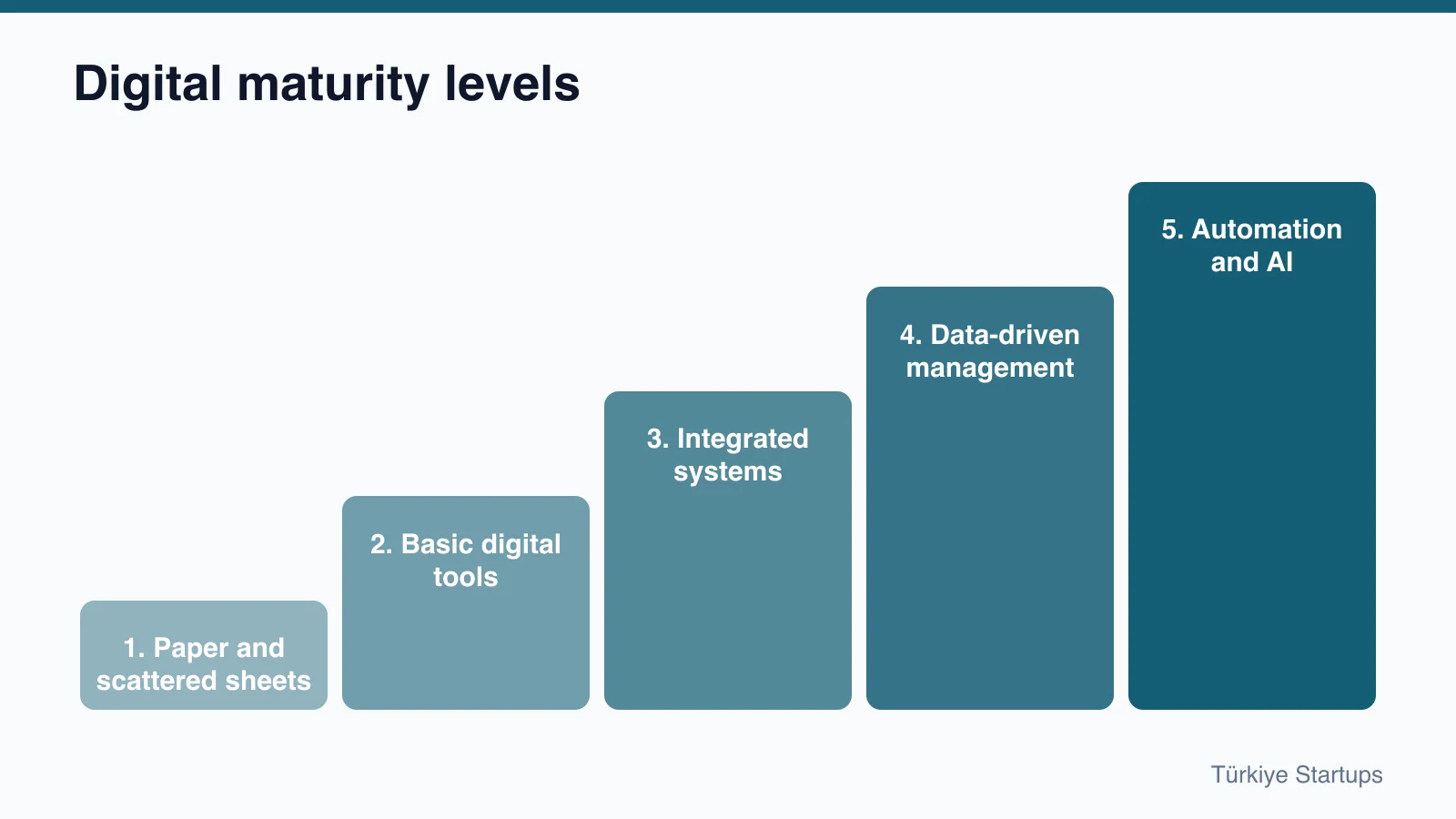
Automation and AI
Once core systems are in place, automate repetitive work: invoice reminders, order notifications, report preparation, moving form data. AI can save small businesses a lot of time in areas such as text generation, answering customer questions, summarising documents and data analysis. See automation tools and AI and SME productivity.
Cybersecurity and data protection
Digitisation brings new risks:
- Strong passwords and multi-factor authentication
- Regular backups
- Access management (not everyone should access everything)
- Staff awareness training (phishing emails)
- Processing personal data in line with the law
See cybersecurity basics and the data protection checklist.
Team and culture
The hardest part of digital transformation is people, not technology.
- Explain the reason for and benefit of the change to the team.
- Involve users in selection.
- Train people and appoint a "digital champion".
- Do not run old and new systems in parallel for long.
- Make small wins visible.
Budget and support
- Cloud software on monthly subscriptions reduces up-front investment.
- Calculate total cost of ownership (licences, set-up, training, integration).
- Follow digitisation support programmes for SMEs; see grants and support programmes and the KOSGEB support guide.
Measuring success
Measure before and after each digitisation step: time, error rate, sales, customer satisfaction, cost. See the KPI guide.
Common mistakes
- Buying software without a needs analysis
- Trying to change everything at once
- Using many tools that do not talk to each other
- Not training the team
- Leaving security for later
- Treating transformation as a one-off project
FAQ
Where should I start digital transformation? With the process that wastes the most time or produces the most errors; usually sales tracking, invoicing or stock management.
Is a big budget needed? No; you can start with small steps using cloud-based subscription tools.
How long does it take? Basic digitisation can be done in a few months; transformation is an ongoing improvement process.
Conclusion
Digital transformation for SMEs succeeds by choosing the right priorities, starting with small but effective steps, connecting systems and involving the team. Map your current state, start with quick wins and measure every step. For a lean experimentation culture, see our what is the Lean Startup article as well.
This guide is for general information only and is not legal, financial or investment advice. Check official sources and consult professionals for current terms.