How to apply for a patent: patents, utility models and protection for startups
What a patent is, patentability criteria, how utility models differ, the application process and documents, international protection, cost items and patent strategy for startups.
By Editorial Team

A patent is an intellectual property right that gives the owner of an invention the right to stop others from making, using, selling or importing it without permission for a set period and territory. For startups in technology, hardware, biotech, medical devices and engineering, patents can bring competitive advantage, investor confidence and licensing income. But the process takes time and money, and not every invention is patentable. This guide is general information; always work with a patent attorney or IP specialist before filing and verify current rules with the relevant official body.
Patentability criteria
To be protected by a patent, an invention generally must meet three criteria:
- Novelty: The invention must not have been disclosed to the public anywhere in the world before the filing date.
- Inventive step: It must not be obvious to an expert in the field.
- Industrial applicability: It must be capable of being made or used in industry.
Generally not patentable: Discoveries, scientific theories, mathematical methods, methods of doing business, computer programs as such, aesthetic creations and inventions contrary to public order. Software-related inventions may be protected in certain conditions when they have a technical effect or solve a technical problem; this area needs expert assessment.
Important: file before you disclose
Showing the invention at a fair, publishing it in an article, sharing it on social media or describing it in detail in an investor pitch can destroy novelty. If you must share details before filing, use a confidentiality agreement; see the NDA guide.
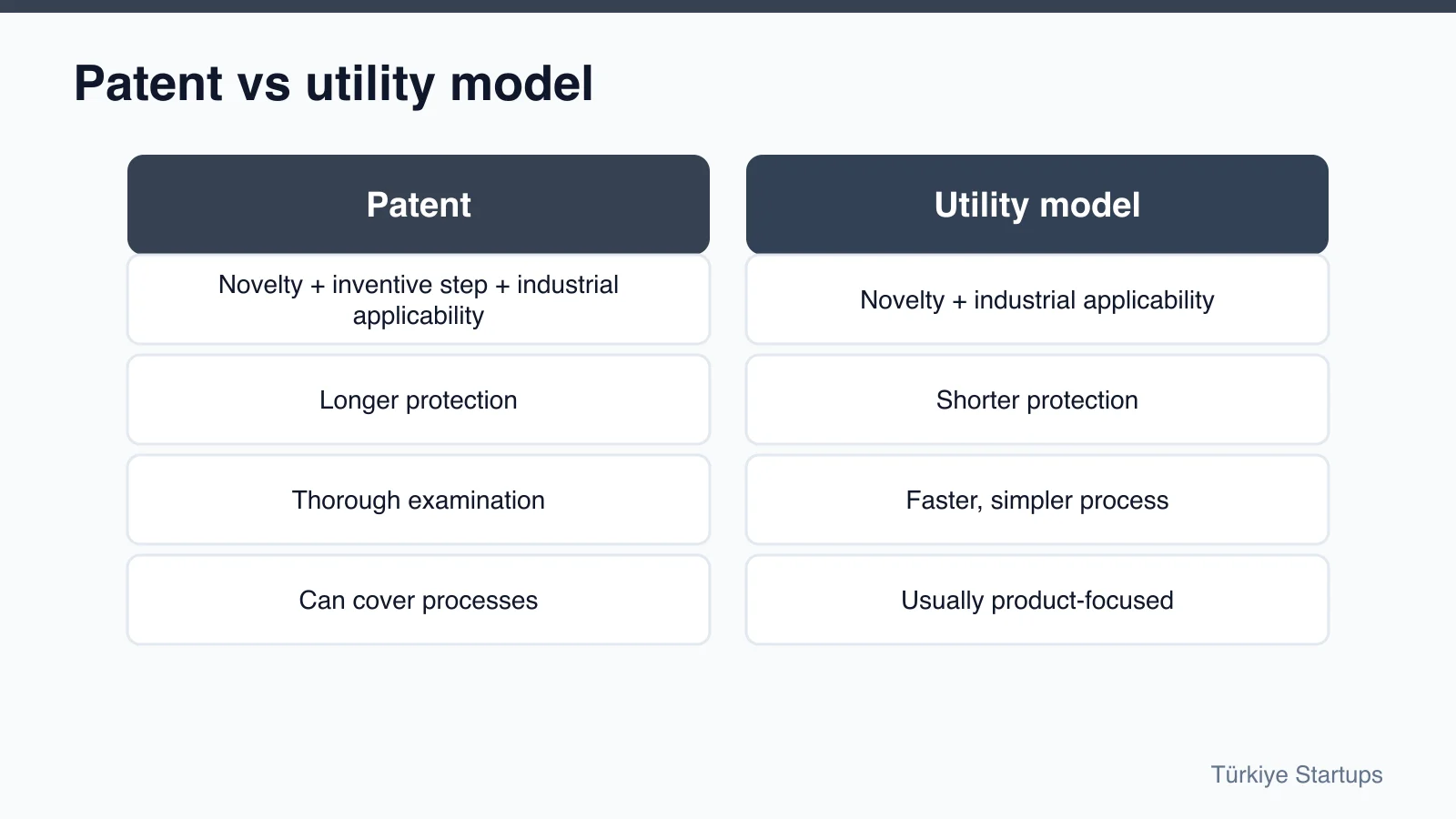
Patent vs utility model
A utility model is a faster, cheaper form of protection for simpler inventions. The inventive step requirement is absent or more flexible, and the protection period is shorter than a patent's. Process and method inventions generally cannot be protected with a utility model. Decide which fits with an expert based on the nature of the invention.
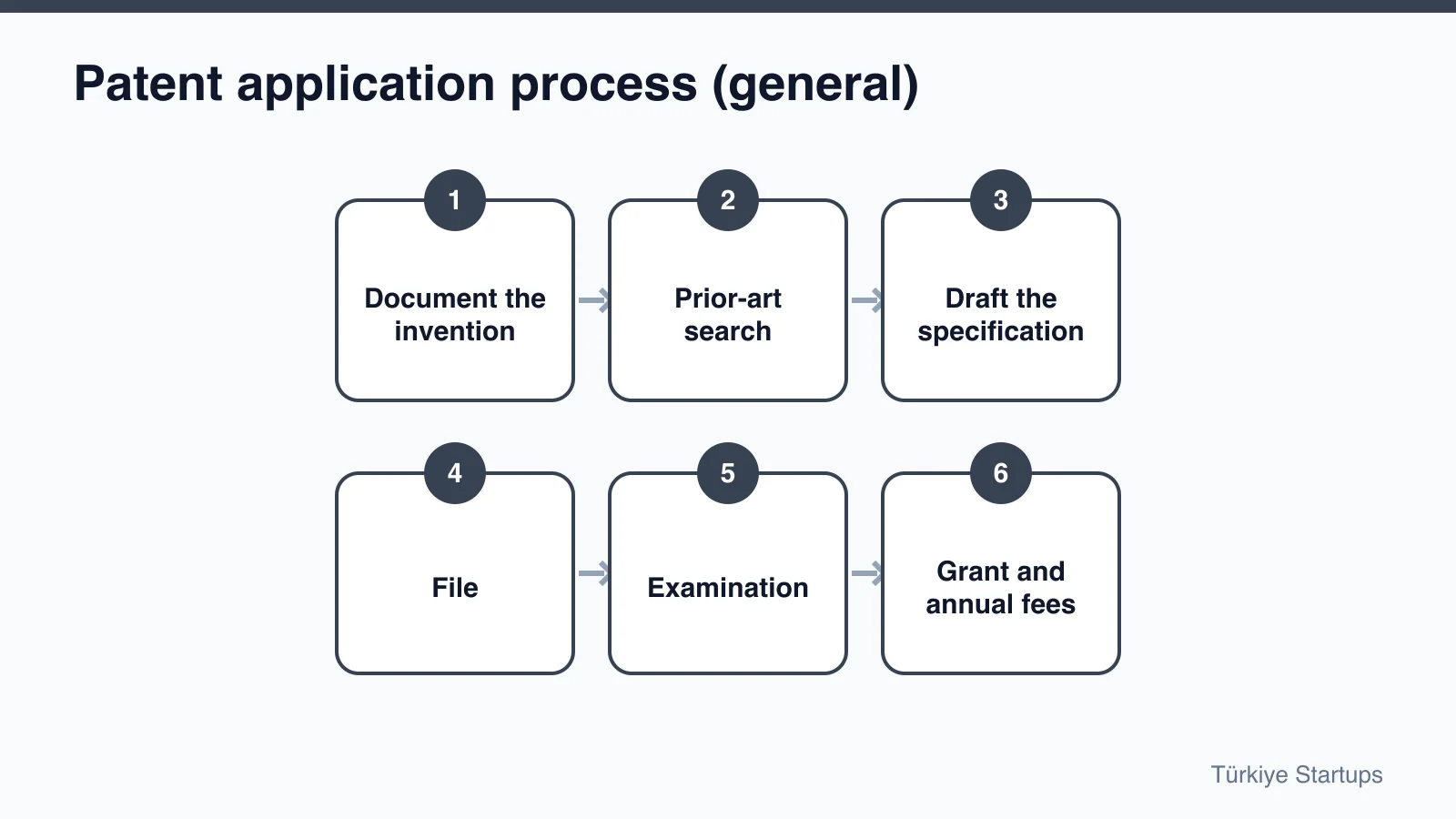
Application process (general frame)
- Document the invention: Record the problem, solution, drawings, test results and development dates.
- Prior-art search: Search similar patents and publications. This step avoids wasted cost.
- Draft the specification: A detailed description, claims (the section defining the scope of protection), abstract and drawings. How the claims are written directly determines the strength of protection; professional support is critical.
- File the application: At the national patent office; the filing date becomes the priority date.
- Search and examination: The office searches the prior art and examines the invention; there may be objections and responses.
- Grant: If the criteria are met, the patent is granted.
- Annual fees: Fees must be paid on time to keep protection.
Timelines and fees vary by country and application type; get current information from the official body.
International protection
Patent protection is territorial: a patent granted in one country is valid only there.
- Priority right: Within a set period from the first filing, you can file for the same invention in other countries with priority.
- International application systems: Systems exist that let one application prepare for later national phases in many countries.
- Regional patents: In some regions a single application covers several countries.
Decide which markets need protection based on your business plan; each country means extra cost. For international expansion see setting up a company abroad.
Cost items
- Filing, search and examination fees
- Patent attorney or lawyer fees
- Translation costs (for international filings)
- Annual maintenance fees
- Possible opposition and litigation costs
Some public support programmes may cover part of patent application costs; see grants and support programmes and technology park and R&D incentives.
Patent strategy for startups
- Do not patent everything: Focus on the core technology that creates competitive advantage.
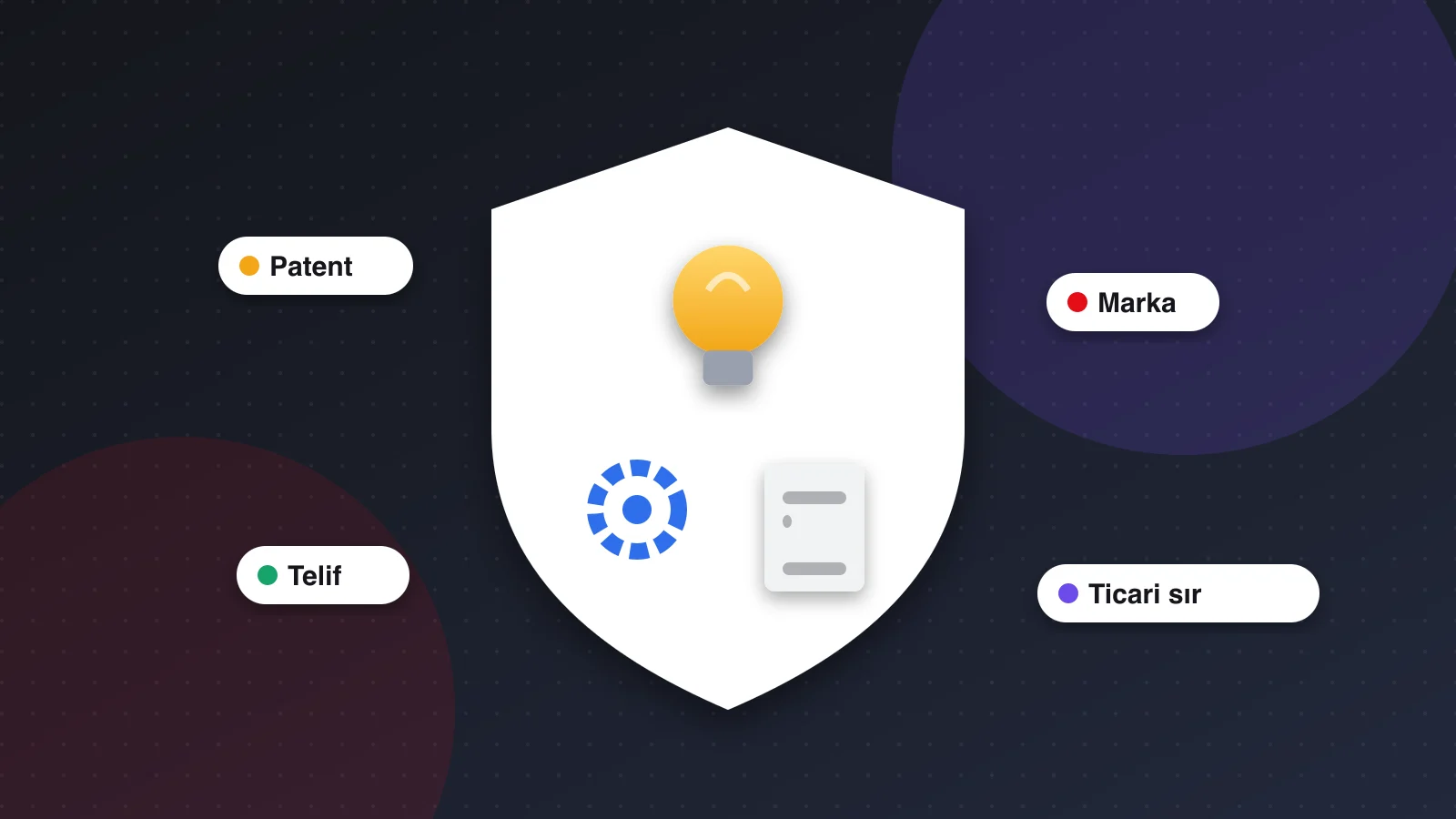
- Trade secret alternative: Some information (formulas, algorithms, processes) can be protected as trade secrets instead, because a patent discloses the invention.
- Timing: File before launching the product.
- Ownership: Secure by contract that inventions developed by founders, employees and contractors belong to the company; see the founders' agreement.
- Investor view: A patent portfolio can affect valuation, especially for deep-tech startups; see deep-tech startups.
- Others' patents: Check that your product does not infringe others' patents (freedom-to-operate analysis).
For the wider IP frame see the IP guide for startups and trademark registration.
Common mistakes
- Disclosing the invention publicly before filing
- Filing without a prior-art search
- Writing claims too narrow or too broad
- Forgetting to pay annual fees
- Protecting in only one country and forgetting target markets
- Not clarifying ownership of employee and contractor inventions
FAQ
Can an idea be patented? No; only concrete inventions offering a technical solution can be patented.
Can software be patented? A computer program as such generally cannot, but software-based inventions with a technical effect may be protected in certain conditions. Software is also protected by copyright.
How long does the patent process take? It varies by country and examination; it can often take several years.
Conclusion
Obtained at the right time and with the right scope, a patent is a powerful tool that protects your startup's technology. File before disclosing, do a prior-art search, get professional support and align your protection strategy with your business plan. To protect yourself while sharing ideas, see our NDA guide.
This guide is for general information only and is not legal, financial or investment advice. Check official sources and consult professionals for current terms.