How to write an investor update
Why send regular updates to current and prospective investors, how often, a sample structure, sharing bad news and asking for help.
By Editorial Team
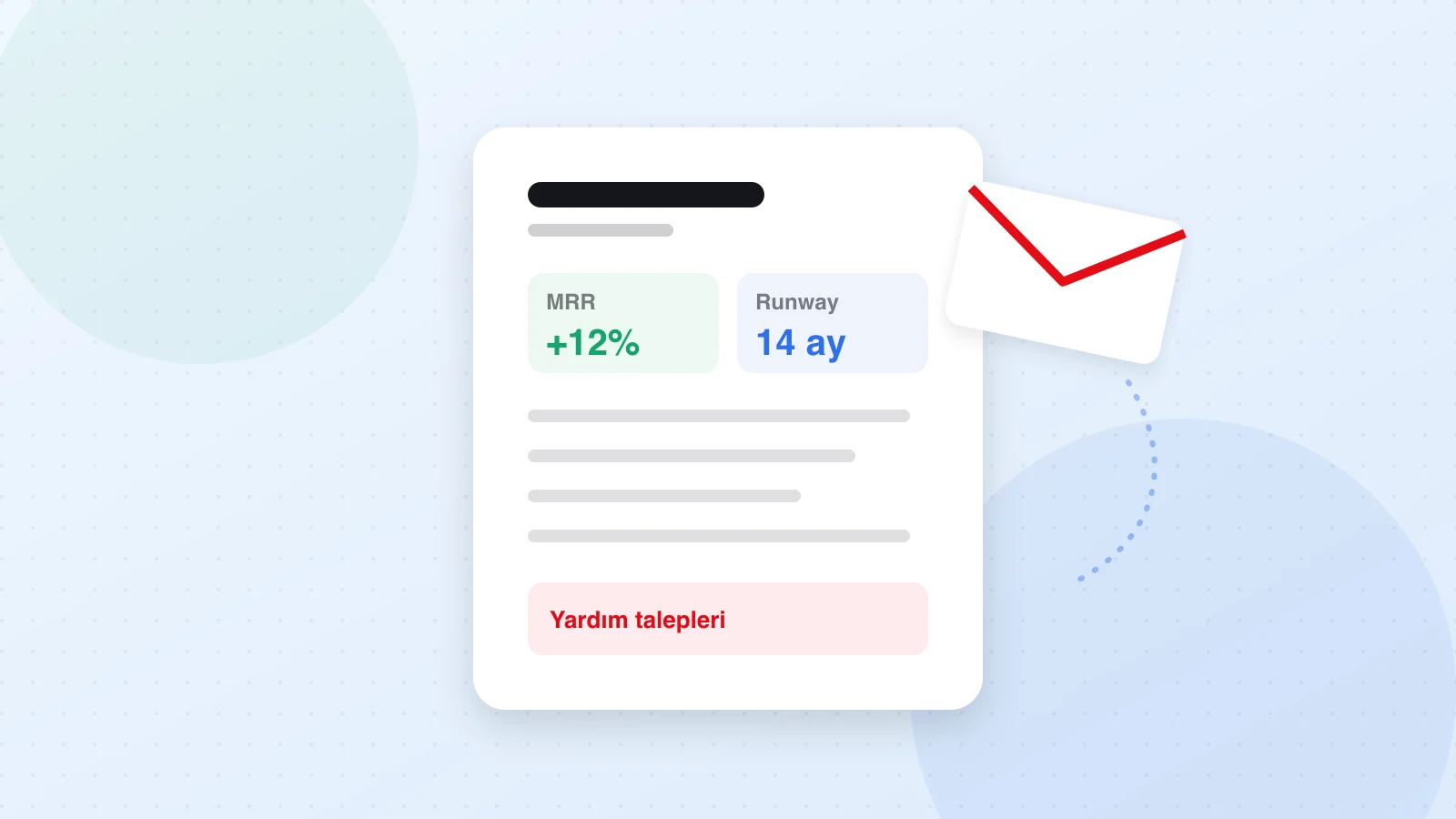
Communication with investors does not end after the round; the real relationship starts then. A short investor update sent regularly builds trust, makes it easier for investors to help and sets up the next round.
Why update regularly?
- Trust: consistent, transparent communication keeps investor support even when things go badly.
- Help: investors can only use their networks and experience if they know what you need.
- Next round: existing investors are the first people you turn to; having followed your progress for months speeds things up.
- Discipline: writing up metrics every month keeps founders focused too.
If you have not raised yet, a short quarterly update to interested investors keeps the relationship alive.
How often?
Monthly at the early stage, quarterly for more mature companies. Consistency matters most: same date, same format.
Sample structure
1. Summary (2–3 sentences)
The month's most important development and the overall picture.
2. Key metrics
The same metrics every month, compared with the previous month:
- Revenue or MRR and growth rate
- Customers or users
- Churn or retention
- Monthly net burn and runway
See our startup metrics guide for definitions and our cash flow guide for cash.
3. Highlights
New major customers, launches, key hires, partnerships.
4. Challenges
Say clearly what did not go to plan and what you are doing about it.
5. Asks
Concrete, easy-to-answer requests: "Introductions to procurement heads in sector X", "Recommendations for a senior backend engineer". This is the most valuable part of the update.
6. Thanks
A short thank-you to investors who helped last month encourages more help.
Sharing bad news
- Do not hide it; investors finding out by surprise damages trust.
- Explain what happened, why and what you are doing.
- For a major issue, call key investors before the update goes out.
Writing tips
- Keep it short: readable on a phone in two minutes.
- Use bullet points and bold numbers.
- Use the same template every month for easy comparison.
- Check the recipient list carefully when sharing confidential information.
Conclusion
A good investor update takes 30 minutes to write and builds trust for months. When preparing your next round, our due diligence guide will help too.
This guide is for general information only and is not legal, financial or investment advice. Check official sources and consult professionals for current terms.