Startup metrics investors look at: MRR, churn, CAC and LTV
How to calculate growth, retention and unit-economics metrics, which ones matter at which stage and how to present them to investors.
By Editorial Team
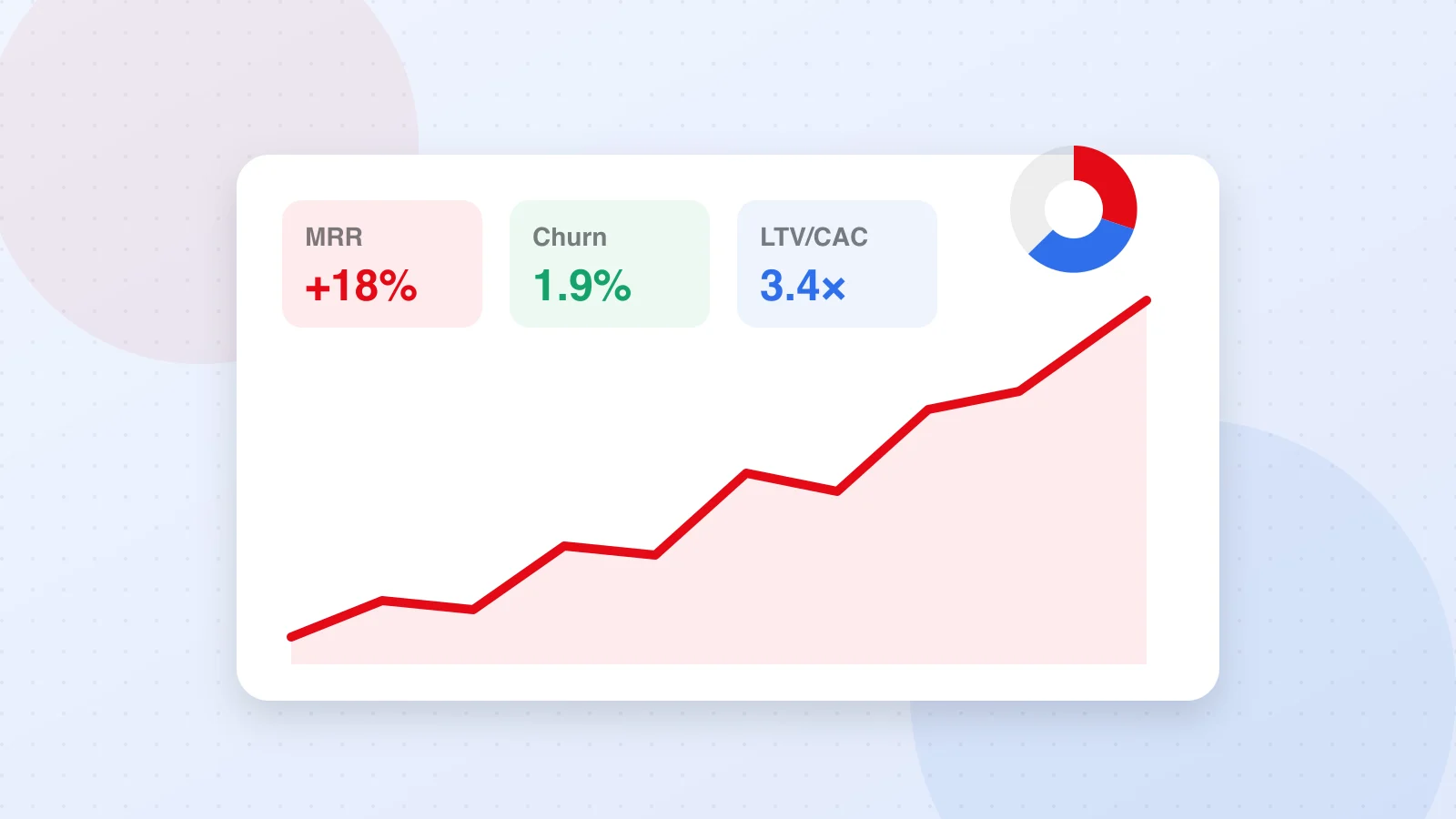
Investors listen to the story, but they decide largely on numbers. Calculating the right metrics correctly and presenting them consistently builds trust. This guide covers the metrics investors ask about most and how to calculate them.
Revenue and growth
MRR and ARR
MRR (monthly recurring revenue) is the revenue you earn every month from subscriptions. One-off sales and set-up fees are excluded. ARR (annual recurring revenue) is usually MRR × 12.
Growth rate
Month-on-month growth: (this month's MRR − last month's MRR) / last month's MRR. At the early stage, steady, high monthly growth attracts more attention than absolute revenue.
Retention
Churn
- Customer churn: customers who cancelled in a period / customers at the start of the period
- Revenue churn: MRR lost / MRR at the start of the period
Net revenue retention (NRR)
Revenue from existing customers after a year divided by their revenue a year earlier. If upsells exceed losses it is above 100 percent, a strong product signal.
Cohort analysis
Shows how many users who signed up in the same month remain active in later months. If the retention curve flattens, the product has lasting value.
Unit economics
CAC (customer acquisition cost)
Total sales and marketing spend in a period / new customers won in that period.
LTV (lifetime value)
Simple version: average monthly revenue per customer × gross margin / monthly churn rate.
LTV/CAC and payback
- An LTV of at least three times CAC is considered healthy.
- CAC payback: how many months it takes to earn back the cost of winning a customer. Shorter means growth needs less capital.
Gross margin
(Revenue − direct costs) / revenue. High for software, lower for hardware and operations-heavy businesses.
Cash
- Burn rate: monthly net cash outflow
- Runway: cash in the bank / monthly burn. How many months you can keep going. Start raising at least six months before runway ends; see our seed round guide.
Priorities by stage
- Idea and MVP: engagement, retention, willingness to pay. See our MVP guide.
- Seed: MRR growth, churn, early unit economics
- Series A and beyond: NRR, LTV/CAC, CAC payback, efficient growth
Model-specific metrics also matter: gross merchandise value (GMV) and take rate for marketplaces, DAU/MAU for consumer apps.
When presenting
- Write down your definitions and use the same method every month.
- Show the trend, not one good month.
- Do not hide weak metrics; explain why and what you are doing about it.
- Be ready to share the underlying data in due diligence.
Keeping your metrics up to date on your Türkiye Startups profile makes it easy for investors to follow your progress.
This guide is for general information only and is not legal, financial or investment advice. Check official sources and consult professionals for current terms.