What is a cap table and how do you keep one?
What a cap table contains, fully diluted shares, how a round changes the table, a worked example and tips for keeping it clean.
By Editorial Team
A cap table (capitalization table) shows a company's ownership: who holds how many shares, what percentage that is, and which rights might turn into shares later. It is the core document in every round, when granting options and at a sale.
What it contains
- Shares held by founders, investors and other shareholders
- Share classes (common, preferred)
- The employee option pool: granted and ungranted options
- Convertible instruments (SAFEs, notes) and their possible conversion effects
- Each holder's percentage, current and fully diluted
Fully diluted ownership
Ownership calculated as if all options were exercised and all convertibles converted. Investors usually discuss valuation and stakes on this basis.
Example: the effect of a round
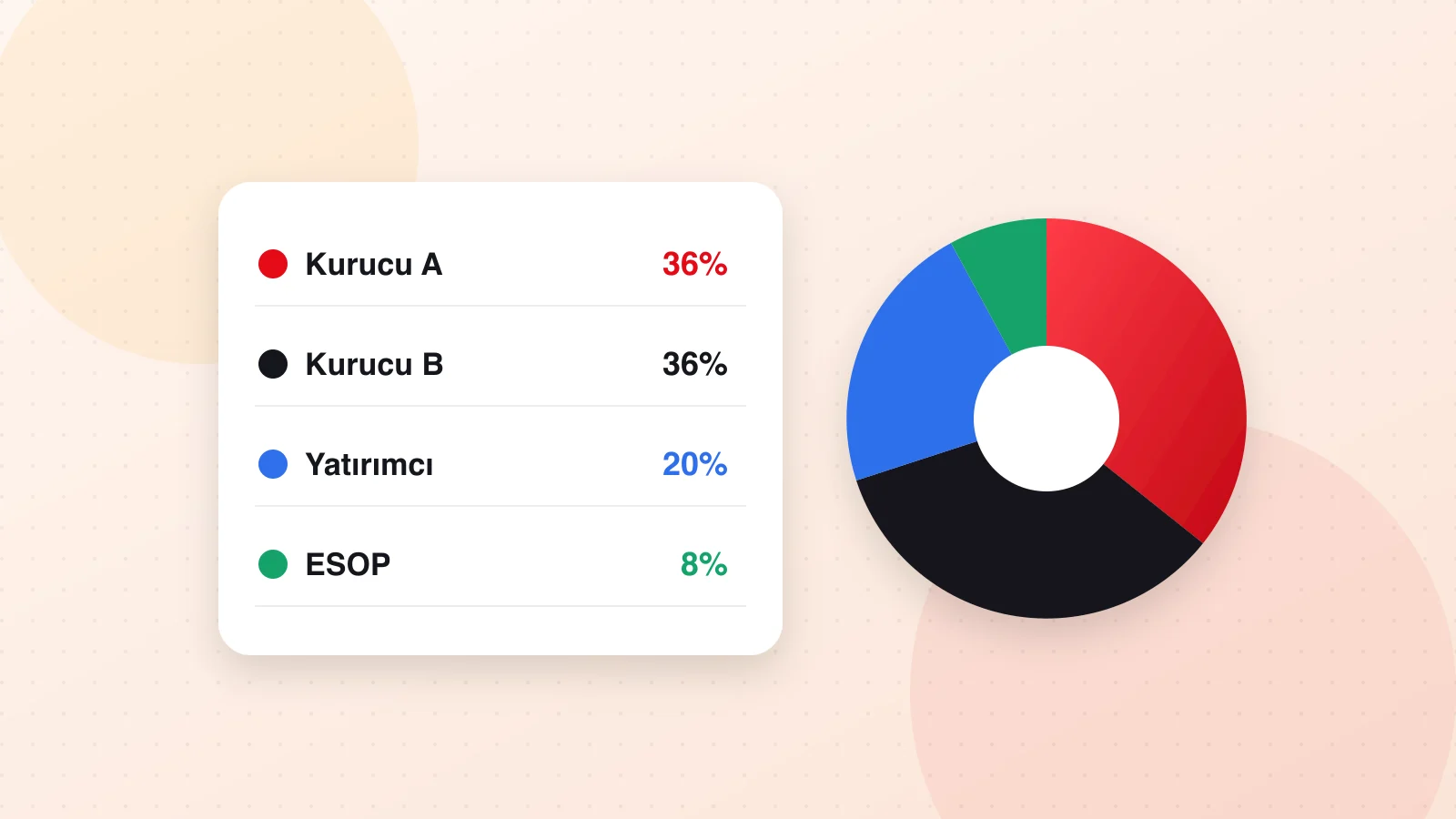
Two founders start with 500,000 shares each (1,000,000 in total).
- Before investment, a 10 percent option pool is created: about 111,000 new shares. Each founder now holds about 45 percent.
- In the seed round, the investor takes 20 percent post-round. About 278,000 new shares are issued.
- After the round, each founder holds about 36 percent, the pool about 8 percent and the investor 20 percent.
This shows how creating the pool before the round affects founders; see our ESOP guide and term sheet guide.
How to keep it
- Early on a well-kept spreadsheet is enough; equity management software helps as you grow.
- It must always match trade registry records and the share ledger.
- Update after every event (new investment, transfer, option grant).
- Build scenario tables for several future rounds; our funding rounds guide describes the stages.
Why a clean cap table matters
- Many small, passive shareholders can complicate decisions.
- Founders giving away too much too early causes motivation and control problems later.
- Vague or unwritten equity promises cause serious trouble in due diligence.
Conclusion
The cap table is the company's ownership memory. Keep it accurate, current and consistent with official records, and model the effect before every new deal.
This guide is for general information only and is not legal, financial or investment advice. Check official sources and consult professionals for current terms.