What is RAG? Connecting company data to AI with retrieval-augmented generation
How RAG works, chunking documents and vector search, when to use it, quality tips, access permissions and common mistakes.
By Editorial Team
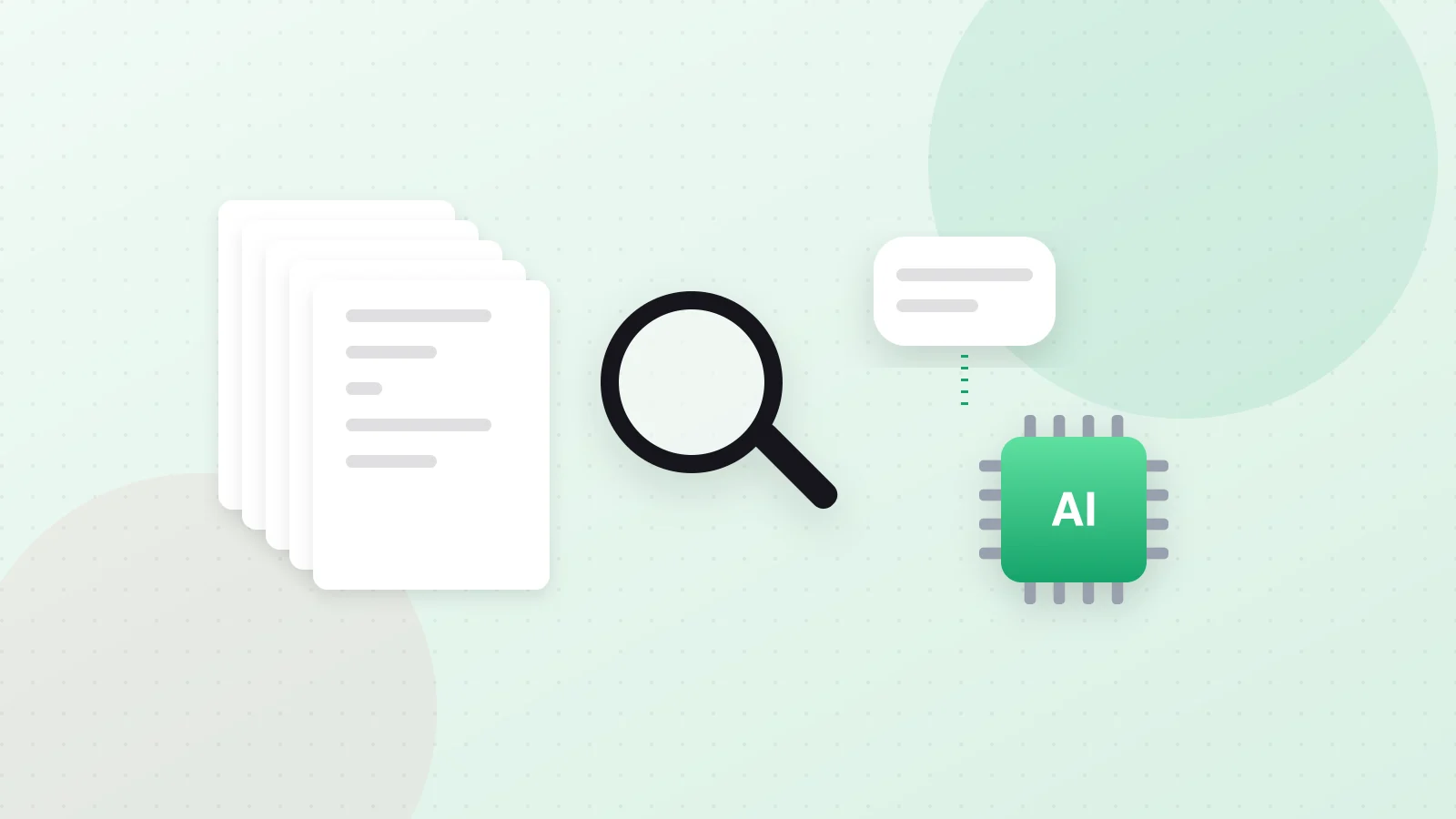
RAG (retrieval-augmented generation) lets a language model find relevant information in company documents or databases before answering. It is the most common way to get accurate answers about current or company-specific information the model was not trained on.
How it works
- Preparation: documents are split into meaningful chunks and each is turned into a numeric vector representing its meaning.
- Retrieval: when a user asks, the chunks closest to the question's vector are found (usually combined with keyword search).
- Generation: the retrieved chunks go to the model with the question; it answers based on them and cites sources.
When to use it
- Q&A over internal documents, policies and knowledge bases
- Customer support assistants; see AI in customer service
- Document analysis in law, health or finance
- Frequently changing product and pricing information
When knowledge changes and sources must be cited, RAG is usually more suitable and cheaper than fine-tuning.
Quality tips
- Chunking: too small loses context, too large adds noise; preserve headings and sections.
- Hybrid search: combine semantic and keyword search; important for product codes and names.
- Re-ranking: sort retrieved results by relevance in a second step.
- Citations: show which documents an answer relies on.
- Saying "I don't know": ask the model to say so when the context lacks the answer; see our hallucination guide.
Permissions and privacy
Users should only get answers from documents they may see. Enforce permissions at retrieval time. Assess KVKK requirements for documents with personal data; see our AI and KVKK guide.
Measurement
Measure retrieval accuracy and answer accuracy separately; problems are often in retrieval, not generation; see our model evaluation guide.
Conclusion
RAG is the most practical way to connect company knowledge to AI safely and up to date. Good search is half of a good RAG system.
This guide is for general information only and is not legal, financial or investment advice. Check official sources and consult professionals for current terms.