How to evaluate AI outputs: a guide for product teams
Building evaluation sets, criteria, automated and human evaluation, model-graded evaluation, regression testing and monitoring in production.
By Editorial Team
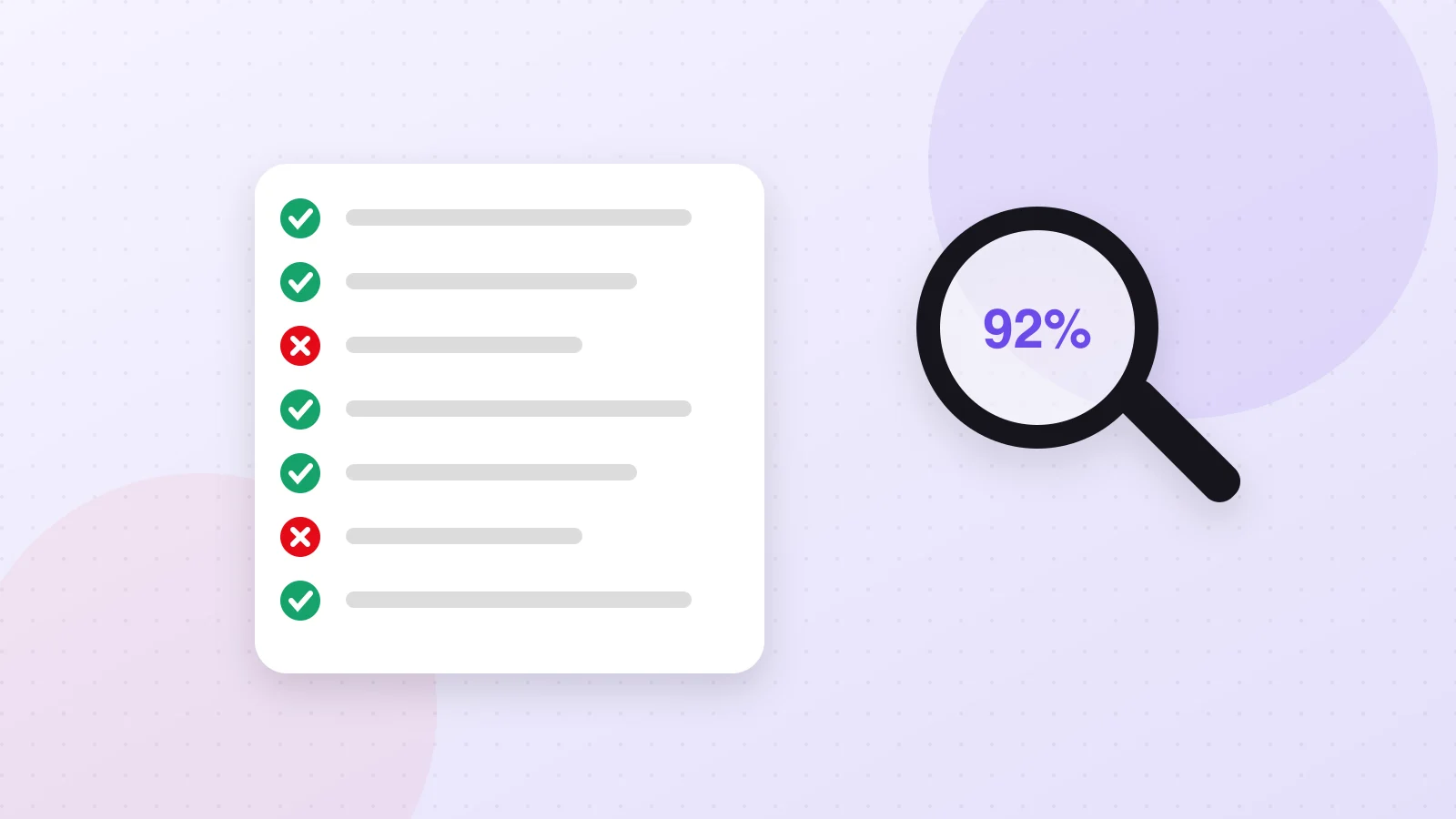
For AI features, "it seems to work" is not enough. The only way to know whether quality goes up or down when a prompt, model or data changes is systematic evaluation (evals). Evaluation is the test infrastructure of AI products.
Building an eval set
- Collect 50–200 representative inputs from real usage.
- Include easy, hard and edge cases.
- Where possible, write the expected answer or acceptance criteria for each.
- Remove personal data; see AI and KVKK.
Grow the set over time with errors users encounter.
Criteria
Choose by task:
- Accuracy: is the answer factually right?
- Groundedness: is it based on the given sources? See RAG.
- Completeness and relevance: does it fully answer the question?
- Format: is it in the required format?
- Safety: any harmful or inappropriate content?
- Tone and language: on-brand and correct Turkish?
Methods
- Rule-based checks: format, length, presence of key information
- Reference comparison: matching expected answers in classification and extraction
- Human evaluation: expert scoring; most reliable, slowest
- Model-graded evaluation: another model scoring with clear criteria; fast but must be calibrated against human judgment
Regression testing
Run the eval set before every prompt, model or data change and compare with the previous version. Make it part of your continuous delivery pipeline.
Monitoring in production
- User feedback (liked, disliked, edited)
- Regular review of sample conversations
- Error, refusal and handoff rates
- Cost and latency; see AI costs
Conclusion
An AI feature without evals is like software without tests. Start with a small set, add every failure and track quality in numbers. This is also the basis for reducing hallucinations.
This guide is for general information only and is not legal, financial or investment advice. Check official sources and consult professionals for current terms.