What is a sales funnel? Stages, metrics and how to build one
The stages of a sales funnel (awareness, interest, consideration, decision, loyalty), content and channels for each stage, conversion rates, funnel metrics and how to improve them.
By Editorial Team
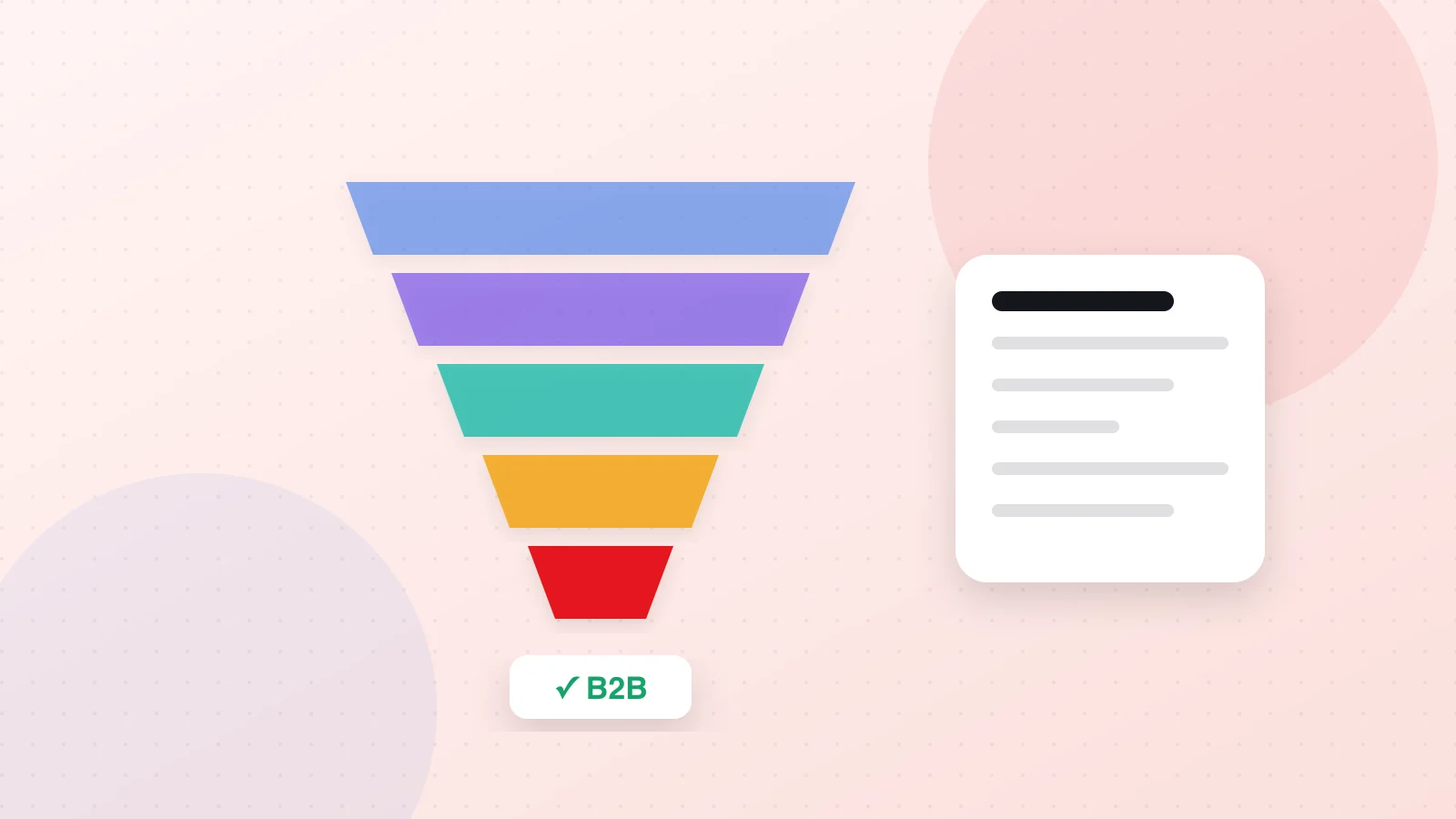
A sales funnel is a model showing the stages a potential customer goes through, from first meeting your brand to buying and remaining loyal. It is funnel-shaped because at each stage some people do not move on and the number narrows. A startup that understands its funnel sees where it loses customers, directs budget to the right stage and makes sales predictable. In this guide we cover the stages of the sales funnel, content and channels for each stage, key metrics and how to improve the funnel.

Stages of the sales funnel
1. Awareness
The person realises they have a problem and meets you for the first time.
- Channels: Search engines, social media, content, ads, press, referrals.
- Content: Educational blog posts, short videos, guides; see content marketing and the SEO guide.
2. Interest
The person looks for solutions and wants to learn more about you.
- Channels: Website, newsletter, webinars, social follows.
- Content: Detailed guides, free templates, email sequences; see email marketing.
3. Consideration
The person compares alternatives.
- Content: Case studies, comparison pages, demos, free trials, customer reviews.
- In B2B: Sales calls and needs analysis; see the B2B sales process.
4. Decision
The person decides to buy.
- Content: A clear pricing page, proposal, guarantee, easy payment, objection answers; see writing a price quote and sales objection handling.
5. Loyalty and referral
The sale does not end there; a satisfied customer buys again and recommends you.
- Content: Onboarding, support, loyalty programme, referral programme; see customer loyalty.
TOFU, MOFU, BOFU
In marketing the funnel is also described in three parts:
- TOFU (top of funnel): Awareness; educational content for a broad audience.
- MOFU (middle of funnel): Interest and consideration; capturing and nurturing leads.
- BOFU (bottom of funnel): Decision; converting to sales.
Set separate content and separate success metrics for each part.
Funnel metrics
| Metric | What it shows |
|---|---|
| Visitors / reach | Size of awareness |
| Number of leads | Those who moved into interest |
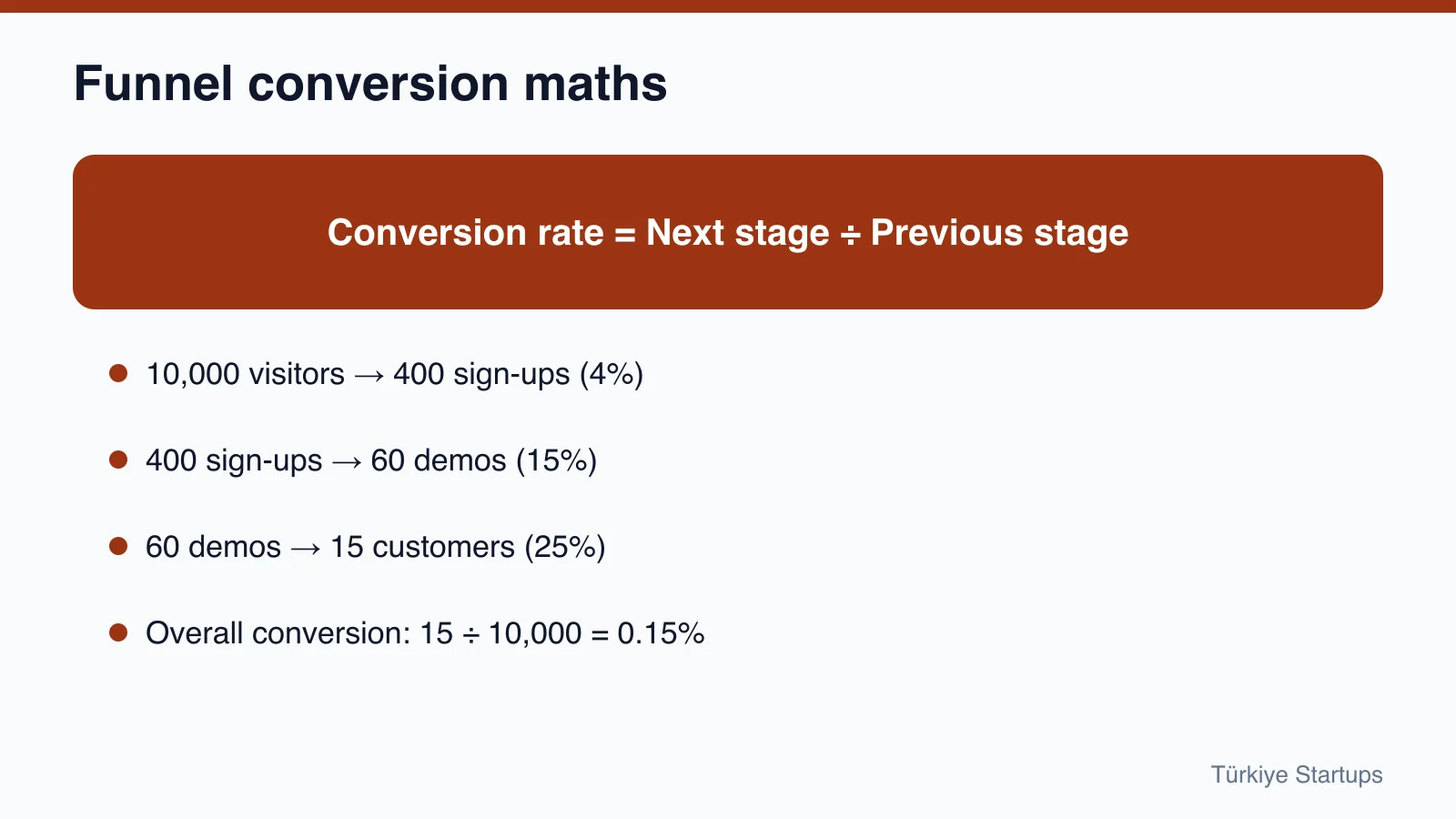
| Stage conversion rates | Which stage loses people |
| Sales cycle length | Time from first contact to sale |
| Customer acquisition cost (CAC) | Cost of winning a customer |
| Customer lifetime value (LTV) | Total return from a customer |
For details see CAC and LTV and the KPI guide.
How to build a sales funnel
- Map the customer journey: How does your customer find you and decide? See the customer journey map.
- Set a target action for each stage: Visit → sign-up → demo → purchase.
- Prepare content and an offer for each stage.
- Set up tracking: Measure each stage with analytics and a CRM; see choosing a CRM.
- Add automation: Post-sign-up email sequences, reminders; see automation tools.
- Measure and improve.
Ways to improve the funnel
- Find the biggest leak: Focus on the stage with the lowest conversion; do not try to fix the whole funnel at once.
- Improve the landing page: A clear message and a single call to action; see landing page.
- Reduce friction: Shorten forms and simplify checkout steps.
- Add trust elements: Reviews, references, guarantees, secure payment.
- Follow up faster: Get back to leads within the first 24 hours.
- Test: Try headlines, offers and price presentation with A/B tests; see A/B testing.
B2B vs B2C funnels
B2C funnels are usually short and fast; impulse buying and emotional messages stand out. B2B funnels are longer, with several decision-makers and demo, proposal and negotiation stages. For details see B2B vs B2C differences.
Common mistakes
- Focusing only on the top of the funnel (traffic) and neglecting conversion
- Not measuring stages
- Not following up leads
- Forgetting the post-sale stage
- Sending every customer the same message
FAQ
What is a good conversion rate? It varies widely by sector, channel and product; the best comparison is your own past performance.
Does a small business have a sales funnel? Yes; every business has one, even if unaware of it. Making it visible is the first step to improving it.
Are a funnel and a customer journey the same? They are close concepts; the customer journey emphasises the customer's experience, the funnel the business's sales stages and measurement.
Conclusion
A sales funnel is a map that makes your sales predictable and manageable. Define the stages, measure each one, find and fix the biggest leak and do not forget the post-sale stage. To plan the marketing side, see our marketing plan guide.
This guide is for general information only and is not legal, financial or investment advice. Check official sources and consult professionals for current terms.