How to size your market: TAM, SAM and SOM explained
TAM, SAM and SOM, top-down and bottom-up methods, a worked example, data sources and what to watch for in an investor deck.
By Editorial Team
Investors look at market size to understand how big your startup can become. A large market alone is not enough, but a small one is usually not a fit for venture capital. Sizing it correctly and credibly makes your deck more trustworthy.
Three concepts
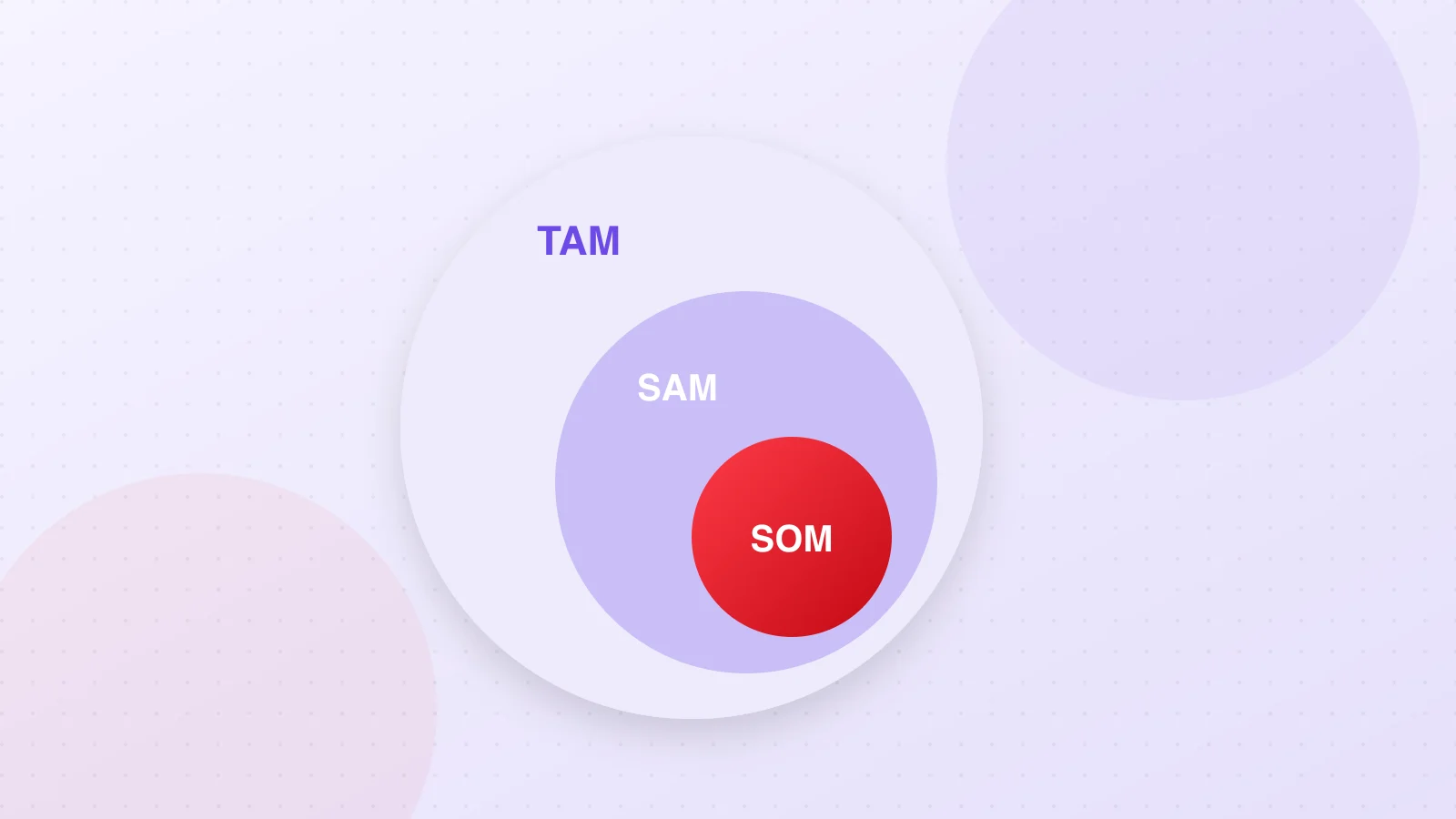
- TAM (total addressable market): total spending on the problem you solve, worldwide or in your target region
- SAM (serviceable available market): the part you can actually reach with your model, geography and product
- SOM (serviceable obtainable market): the share you can realistically win in the next few years
Top-down
Start from an industry report figure and narrow it with percentages. Fast, but often seen as optimistic and shallow. "If we get 1 percent of the market" does not convince investors.
Bottom-up
Multiply the number of target customers by annual revenue per customer. More convincing because it rests on your model.
Example: a startup selling inventory software to restaurants.
- Restaurants in the target segment in Türkiye: X
- Share suited to the software: Y
- Annual subscription per restaurant: Z
- SAM = X × Y × Z
- SOM = SAM × the realistic share reachable in five years (based on sales capacity)
Source each assumption.
Data sources
- Official statistics (TurkStat, ministries)
- Industry association and chamber reports
- Annual reports of listed companies
- Your own interviews and sales data; see our customer interview guide
In the deck
- Show TAM, SAM and SOM on one slide as nested circles.
- Briefly state the method and key assumptions.
- Add market growth and the trend behind you.
- If you plan to expand abroad, show it as a separate layer; see our international expansion guide.
Common mistakes
- Defining TAM too broadly ("the global e-commerce market")
- Using unsourced figures
- Not linking SOM to sales capacity
Conclusion
Good market sizing shows sound logic more than a big number. Reflect it consistently in your business plan and pitch deck.
This guide is for general information only and is not legal, financial or investment advice. Check official sources and consult professionals for current terms.