What are AI agents? Autonomous AI in business workflows
How AI agents differ from chat assistants, tool use, planning, use cases, human approval, security and measurement.
By Editorial Team
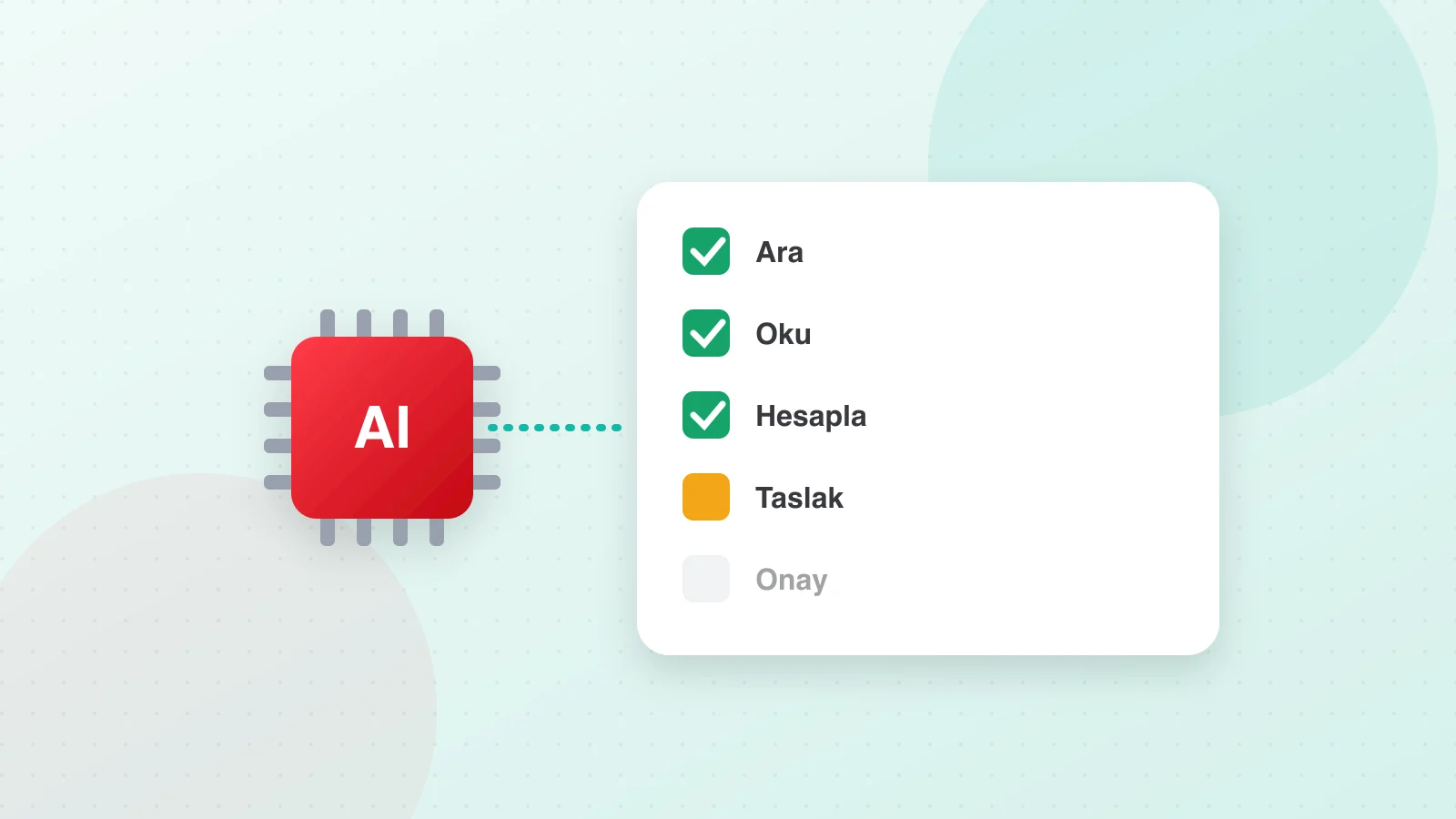
AI agents go beyond assistants that just answer questions: they plan multiple steps towards a goal and carry them out using various tools. For example, an agent can read an email, check the calendar, find a free slot and draft a meeting invite.
How they differ from chat assistants
- Tool use: searching, querying databases, calling APIs, creating files
- Planning: breaking a goal into subtasks and ordering them
- Loop: evaluating results and taking another step if needed
- Memory: carrying information across steps and tasks
Use cases
- Classifying a customer request, opening a ticket and drafting a reply
- Pre-sales research: gathering and summarising company information; see AI in sales and marketing
- Reading invoices and entering them into accounting
- Debugging and writing tests in software; see AI in software development
- Reporting: collecting data from sources into a weekly summary
Design principles
- Start narrow: choose a well-defined, measurable, repetitive workflow.
- Human approval: require approval before irreversible actions such as payments, customer messages or deleting data.
- Least privilege: give the agent access only to the tools and data its task needs.
- Transparency: log the agent's steps and show them to users.
Risks
- Compounding errors: an early wrong step affects later ones.
- Prompt injection: malicious instructions in a document or web page can steer the agent; see our AI security guide.
- Cost: multi-step tasks mean more model calls; see AI costs.
Measurement
Track task success rate, share of steps needing human help, time and cost; see our model evaluation guide.
Conclusion
Agents promise big efficiency gains in repetitive workflows. The keys are narrow scope, strong safeguards and human approval at critical points.
This guide is for general information only and is not legal, financial or investment advice. Check official sources and consult professionals for current terms.